
men cotton tees basic solid are supposed to be the easiest item in your closet, but they’re also the ones that expose every small mistake: a neckline that waves, a body that twists after washing, a fabric that turns see-through in sunlight.
If you’re buying “just a plain tee” and still ending up with a drawer of regrets, you’re not alone. The basics category looks simple online, yet the real differences sit in fabric weight, yarn quality, knit structure, and the kind of fit a brand is built around.
This guide walks through what actually matters, how to judge quality fast, and how to pick a solid-color tee that feels good now and still looks clean after a few laundry cycles.
Why “basic” cotton tees often disappoint
Most frustration comes from a mismatch between expectations and what the tee was designed to do. A lightweight summer tee will never behave like a sturdy everyday uniform shirt, and a fashion-relaxed fit won’t feel like a trim undershirt.
- Shrink and shape loss: cotton fibers can tighten with heat, and cheaper knits can relax unevenly, so the body shortens while the hem starts to twist.
- Neckline stretching: collars without decent rib recovery or stitching support tend to flare after a few wears.
- Opacity issues: lighter colors and low fabric weight can show skin tone, chest hair, or an undershirt line.
- Color fade: solid colors look “basic” only when the dye holds; some blacks go charcoal fast, some navys turn dusty.
- Fit inconsistency: brands grade sizes differently, so a “medium” can swing from slim to boxy even within similar price points.
Also, not every cotton is the same. Fiber length, yarn type, and finishing matter, and you can’t always see that from a product thumbnail.
Fabric choices that change everything (weight, knit, blends)
If you want men cotton tees basic solid that behave predictably, start with fabric specs. The listing may not say everything, but when it does, it’s worth using.
Fabric weight (GSM or oz/yd²)
Weight is a shortcut for drape, opacity, and durability. Higher weight usually means less cling and better structure, though very heavy tees can feel warm in humid weather.
| Weight range | How it tends to feel | Best for |
|---|---|---|
| Light (about 120–150 GSM) | Airy, softer drape, can show through | Hot weather, layering under shirts |
| Mid (about 150–190 GSM) | Balanced, most versatile | Everyday wear, casual office, travel |
| Heavy (about 190–240+ GSM) | Structured, durable, less cling | Streetwear look, workwear vibe, cooler seasons |
Knit and yarn: why two “100% cotton” tees can feel totally different
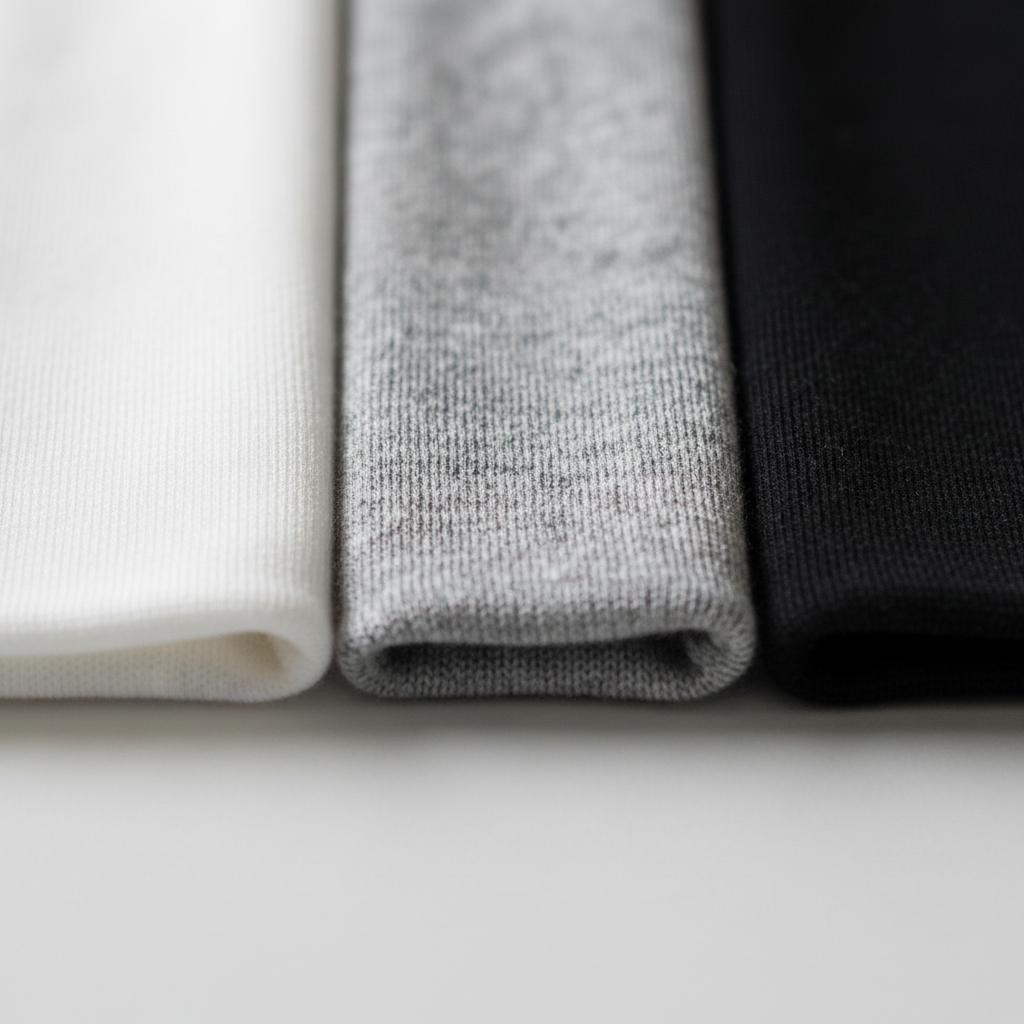
- Jersey knit: the common tee knit; comfort is great, but quality varies widely.
- Ring-spun cotton: often smoother and more durable than open-end yarn, with less “rough” hand feel.
- Combed cotton: typically cleaner, softer, fewer short fibers, and can pill less over time.
When a product page tells you “ring-spun” or “combed,” that usually signals extra processing. It’s not a guarantee of perfection, but it’s a better starting point than a page that says nothing beyond “cotton.”
Blends: when “not 100% cotton” is actually smarter
Pure cotton breathes well, but blends can fix common problems. For many closets, a small percentage of another fiber is a practical upgrade.
- Cotton + elastane (spandex): adds stretch and helps shape retention, great if you hate baggy elbows and wavy hems.
- Cotton + polyester: often improves wrinkle resistance and durability, but can feel warmer depending on the blend and finish.
- Tri-blend: usually soft with a relaxed drape, though it can read more “casual lounge” than crisp basic.
According to Federal Trade Commission (FTC) guidance on textile labeling, fiber content should be disclosed on labels, which helps you compare tees beyond marketing names.
Fit: the three measurements that matter more than size letters
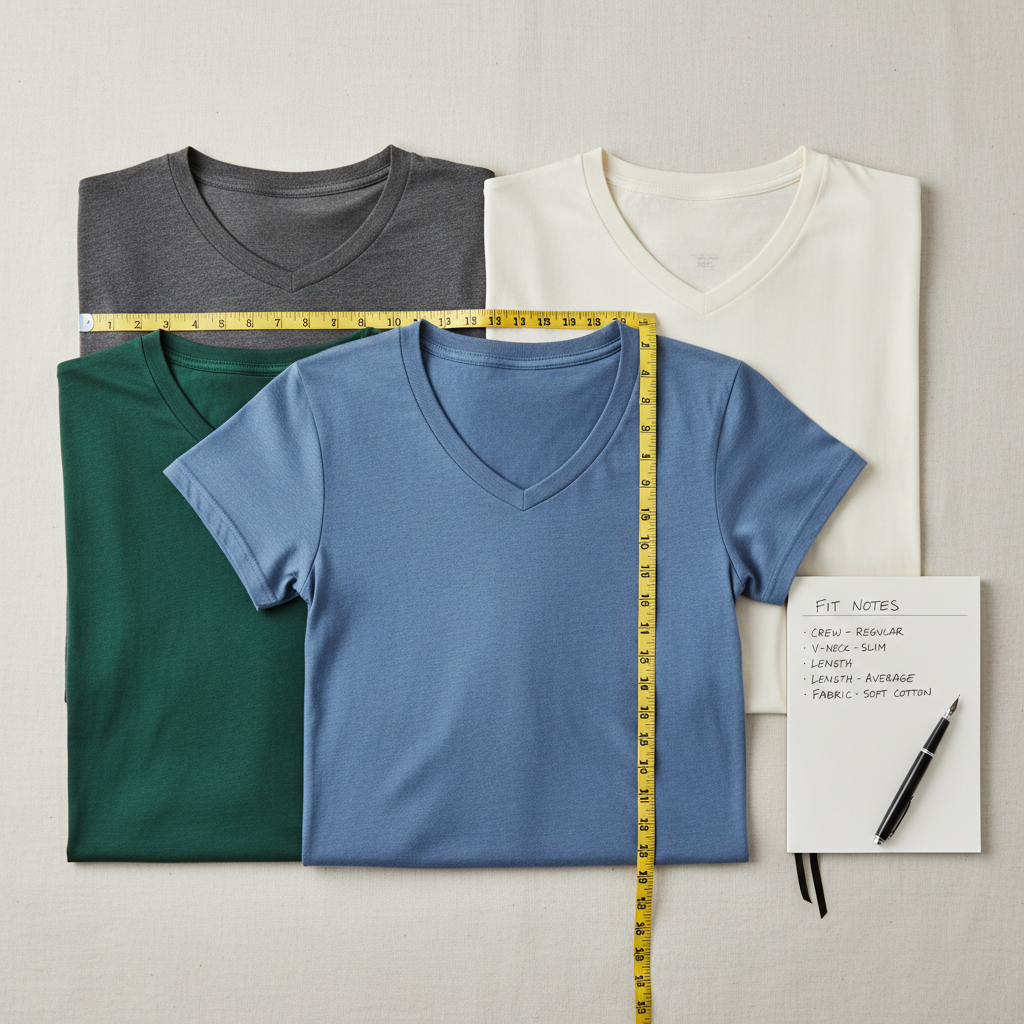
Most returns happen because people shop by S/M/L and ignore the measurements. For a clean basic look, these are the points that change your silhouette immediately.
- Shoulder width: seams should sit near the shoulder bone; too wide reads sloppy, too narrow restricts movement.
- Chest and body width: decide if you want “straight,” “athletic,” or “relaxed” and check the flat measurement.
- Length: if you tuck, go longer; if you never tuck, avoid tees that pool over the hips.
A small but real detail: sleeve length changes the entire vibe. A slightly longer sleeve can make a basic tee look more intentional, while a short sleeve can feel undershirt-like even if the fabric is good.
Quick self-check: which “basic tee problem” do you actually have?
Before you buy another pack, it helps to name the issue. Different problems point to different fixes.
- Your tee turns see-through: you likely need higher fabric weight, a tighter knit, or darker solids.
- Your collar bacon-necks: look for sturdier rib, better stitching, or avoid ultra-lightweight options.
- Your tees shrink unevenly: check care instructions, avoid high heat, consider pre-shrunk cotton or a blend.
- Your hem twists after washing: often a sign of lower-quality cutting/knitting; upgrading the tee usually solves it.
- Your tee looks boxy even in your size: you probably need a different fit block (slim/athletic) rather than a smaller size.
If you’re dealing with more than two of these, it’s usually not “bad luck,” it’s the product tier or fabric choice not matching your expectations.
How to choose men cotton tees basic solid by use case
The “best” tee changes depending on where you wear it. Buying one type for every scenario is where people waste money.
For everyday wear (most people)
- Midweight cotton or cotton-stretch blend for comfort and shape.
- Neckline that sits flat and doesn’t feel tight.
- Colors you can repeat: black, white, navy, charcoal, and one personal accent color.
For hot weather and travel
- Lighter weight is fine, but prioritize opacity in lighter shades.
- Consider cotton-poly blends if you hate wrinkles and slow drying.
- Pick a slightly roomier fit for airflow, especially around the torso.
For layering (overshirts, jackets, hoodies)
- Cleaner neckline and smooth surface so it doesn’t bunch.
- Midweight fabric that doesn’t cling under a jacket.
- Solid colors without heavy texture so the layer on top stays the focus.
Practical buying and care tips that keep basics looking “new” longer
Even great men cotton tees basic solid can look tired fast if care is rough. You don’t need special routines, but you do need consistency.
Buying checklist (fast version)
- Read the fiber label and look for ring-spun/combed details if listed.
- Check fabric weight when available, especially for white and light gray.
- Look at collar construction in close-ups: rib thickness and stitching lines matter.
- Compare garment measurements to a tee you already love, not to your body measurements.
- Start with one before you buy five, unless returns are effortless.
Care tips that actually move the needle
- Wash cold or cool and avoid aggressive high heat drying if shrink bothers you.
- Turn darker solids inside out to help reduce visible fade and surface abrasion.
- Skip overloading the washer; friction is a big driver of pilling and dullness.
According to American Cleaning Institute (ACI) laundry guidance, following care labels and choosing appropriate water temperature can help fabrics maintain appearance, which matters a lot for solid colors where wear shows quickly.
Common mistakes people make with “basic” tees
- Chasing the cheapest multi-pack and expecting the collar and body to hold up like premium tees.
- Ignoring underwear and skin tone when buying white tees; opacity is not a moral failure, it’s fabric math.
- Buying two sizes to solve a fit problem when the real issue is the brand’s fit block.
- Treating all cotton the same, then getting surprised by shrink, twist, or roughness.
If your goal is a clean, minimal wardrobe, consistency beats novelty. The simplest win is finding one tee spec you trust, then repeating it in a tight color palette.
Conclusion: a “basic” tee is only basic when it fits your life
A good solid-color cotton tee should feel easy: it sits right at the shoulders, stays opaque enough for your comfort, and doesn’t turn into a weird shape after laundry. If you take one action today, make it this: compare measurements to a tee you already like, then pick fabric weight based on where you’ll wear it most.
If you’re rebuilding your rotation, buy one test tee first, wash it the way you normally do, and decide after that. It sounds slow, but it saves you from the familiar cycle of “cheap basics” that never feel like basics.
Key takeaways: prioritize fabric weight for opacity, collar construction for longevity, and measurements for fit, everything else is marketing noise.
FAQ
- What does “men cotton tees basic solid” usually mean in product listings?
It typically refers to plain, single-color men’s t-shirts meant for everyday wear, with minimal graphics and a standard fit. The useful info is in fabric and measurements, not the phrase itself. - Is 100% cotton always better than a blend for basic tees?
Not always. Many people prefer 100% cotton for breathability, but cotton-stretch blends can hold shape better, and cotton-poly blends can dry faster. It depends on your comfort and care habits. - How do I avoid see-through white cotton tees?
Look for midweight fabric, a tighter knit, or a slightly heavier white tee. If weight isn’t listed, rely on close-up photos, reviews that mention opacity, and consider an undershirt if needed. - Why do my tees twist at the side seams after washing?
This often happens with lower-quality knits or cutting, and it can worsen with high heat. Upgrading quality and reducing dryer heat tends to help, though no tee is completely immune. - Should I size up or down for a better fit?
Only if measurements support it. If the shoulders are off, changing size might not fix it, you may need a different fit cut. Use a tee you love as a reference for shoulder and length. - What fabric weight is best for everyday solid tees?
Midweight is the safest choice for most climates and styling. If you run hot, go lighter, and if you want a structured look, go heavier. - How can I keep black tees from fading fast?
Turn them inside out, wash in cool water, and avoid harsh drying heat. Gentle cycles and less friction help, but some fading over time is common with dark dyes.
If you’re trying to simplify your closet and want a more dependable rotation of basics, it may help to choose one “core spec” and stick with it, then adjust only for season or layering, it’s a calmer way to shop than chasing a new pack every month.