
How to organize makeup bag efficiently starts with one honest goal, make it easy to find what you need in seconds, not to create a picture-perfect pouch you’ll never maintain.
If your bag feels “small” no matter what size you buy, the issue is usually friction, too many duplicates, products without a home, and liquids that wander until they leak. The fix is less about folding tricks and more about choosing a system you can repeat.
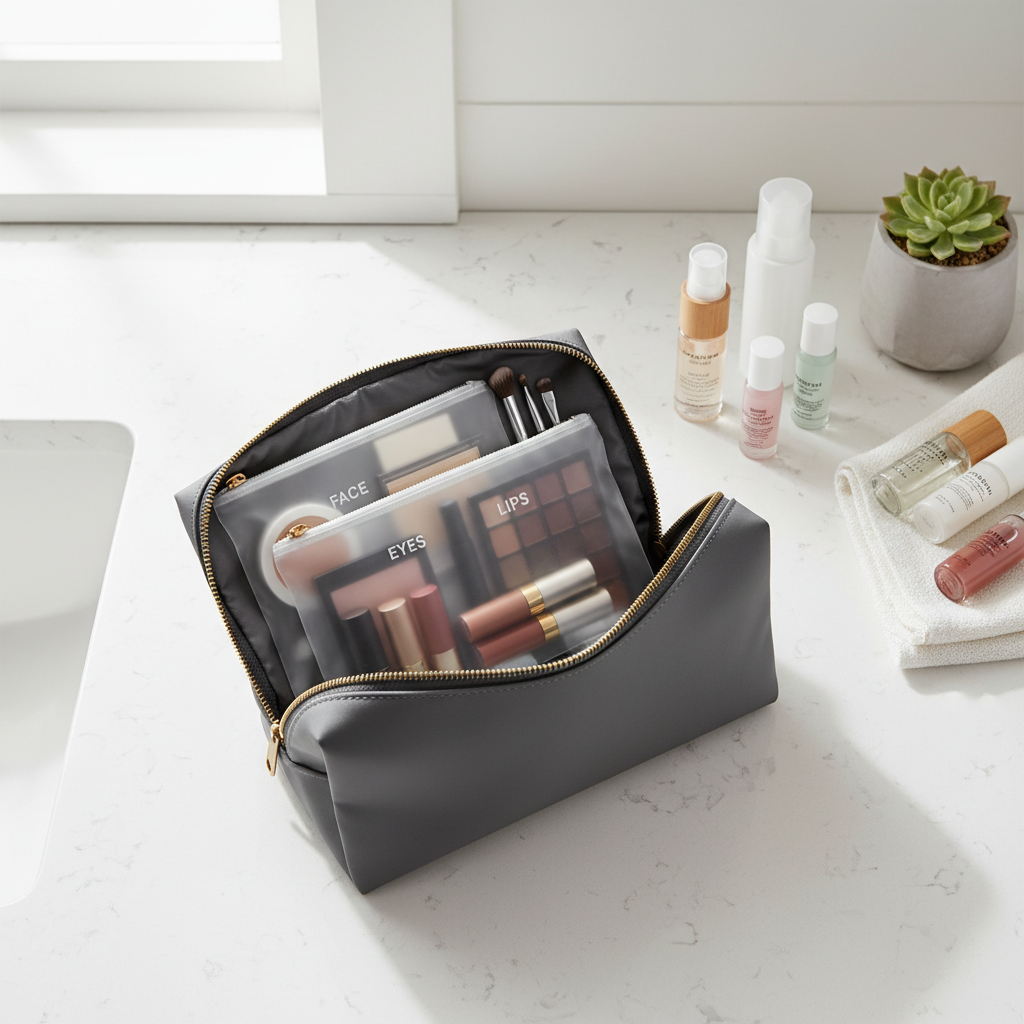
Below is a realistic approach that works for daily carry, gym bags, and travel, plus a quick decision checklist when you feel stuck. You’ll also get a simple table so you can match your routine to the right bag setup.
Why makeup bags get messy (it’s usually not “lack of space”)
Most messy bags come from a few repeat patterns. Once you spot yours, organizing stops being a weekend project and becomes a small reset you can do anytime.
- Too many “just in case” items, especially extra lip products, mini palettes, and half-used samples.
- Mixing product types, powders, creams, tools, and skincare together, so one loose cap creates a domino effect.
- No containment inside the bag, one big compartment means everything becomes a pile the second you move.
- Overpacking full sizes when your routine only needs a small amount for touch-ups or a short trip.
- Dirty tools and residue which makes you avoid using dividers or pouches because they feel like “more cleaning.”
According to the U.S. Food and Drug Administration (FDA), cosmetics can become contaminated with microorganisms over time, especially when exposed to moisture or used with unclean applicators, so keeping tools and liquids controlled is more than aesthetics.
Quick self-check: what kind of makeup bag do you actually need?
Before you reorganize, decide your “bag job.” A workday touch-up kit and a 7-day travel kit should not share the same rules.
- Touch-up only: you need 5–10 items, fast access, and zero spills.
- Daily full face: you need categories (base, eyes, lips, tools) and a repeatable layout.
- Gym or on-the-go: you need sweat-proof wipes, minimal powder mess, and a cleaning mini-kit.
- Travel: you need leak protection, TSA-friendly sizes (when flying), and backups for “forgotten” essentials.
If you can’t describe your use case in one sentence, that’s usually why your setup keeps collapsing.
Build your “core kit” first (the fastest way to cut clutter)
The most reliable way to organize is to set a core kit you never debate, then keep everything else outside the bag. This is the step people skip, then wonder why the bag explodes again.
Use this simple rule, if you haven’t used it in the last two weeks for the bag’s main job, it doesn’t live in the bag.
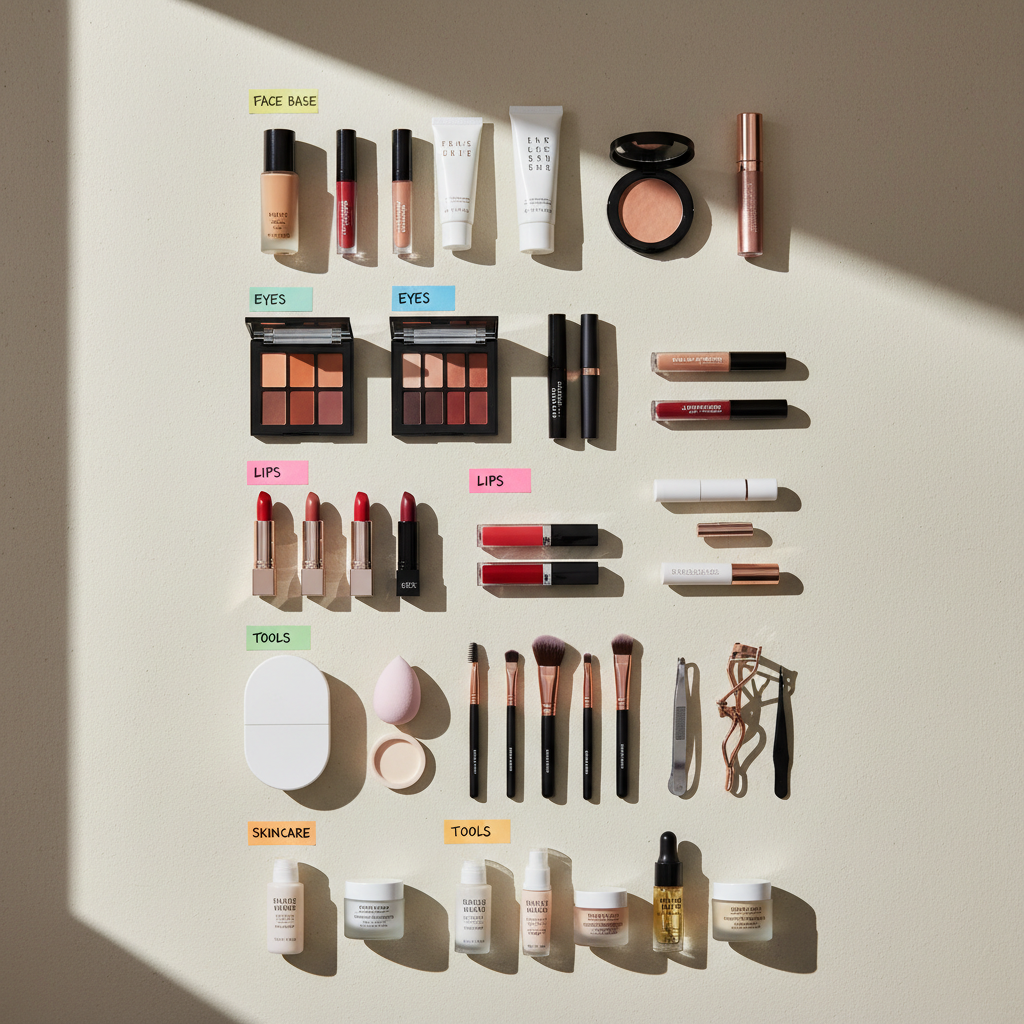
Core kit suggestions (adjust to your routine):
- One complexion product (tinted moisturizer, concealer, or compact)
- One brow product
- One eye option (mascara or a pencil)
- One cheek option (cream blush stick often replaces powder + brush)
- Two lip options (one everyday, one “backup” that also works as blush in a pinch)
- One mini setting product (blotting sheets or small powder)
- Two tools max (mini sponge + travel lash curler, or one multi-use brush)
When you’re figuring out how to organize makeup bag efficiently, multi-use products matter because they reduce both volume and decision fatigue.
Use a simple zoning system (so things stop migrating)
You don’t need fancy organizers, you need boundaries. A zone is just a consistent “home” for each category, so your hands reach the right spot without thinking.
Recommended zones
- Liquids/creams zone: foundation, skincare minis, mascara, anything that can leak.
- Powder/fragile zone: compacts, palettes, pressed powder.
- Tools zone: brushes, sponge, tweezers, sharpener.
- Hygiene zone: wipes, hand sanitizer, small tissues, cotton swabs.
If your bag has no internal pockets, create zones with two small pouches inside. One for “wet,” one for “dry” usually does the job.
Match the setup to your routine (table you can copy)
This is where organizing becomes practical. Pick the row that looks like your week, then build to that, not to someone else’s vanity tour.
| Use case | What to carry | Best bag features | Common mistake |
|---|---|---|---|
| Work touch-ups | Blotting, lip, mini concealer, mini brow | Thin profile, quick-access pocket | Bringing a full brush set |
| Daily full face | Core kit + 1 backup lip + 2 tools | 2–3 compartments, wipeable lining | Duplicates of the same category |
| Gym/on-the-go | Wipes, tinted SPF, mascara, deodorant mini | Water-resistant, easy to clean | Loose powders that spill |
| Weekend travel | Decanted liquids + travel sizes + mini tools | Leakproof pocket, flat-lay opening | Full-size bottles “just in case” |
| Longer trips | Core kit + refill minis + small extras | Modular pouches, clear TSA pouch | Mixing skincare and makeup with no separation |
A step-by-step reset you can finish in 20 minutes
If you want a clean reset without overthinking, follow this sequence. It’s fast, and it keeps you from reorganizing the same clutter into a “neater” clutter.
- Empty everything and wipe the bag lining with a slightly damp cloth, let it air dry.
- Sort into four piles: daily core, occasional, travel-only, trash/expired.
- Cap check: tighten every lid, tape or replace caps that feel loose.
- Decant what you can: move liquids into travel bottles if you only need a small amount.
- Repack by zones, wet items together, powders protected, tools separated.
- Add one cleanup item: a few cotton swabs or a small microfiber cloth prevents buildup.
According to Centers for Disease Control and Prevention (CDC) guidance on hand hygiene, cleaning hands helps reduce germ spread, so tossing a small sanitizer into the hygiene zone can be a practical habit, especially when you apply products on the go.
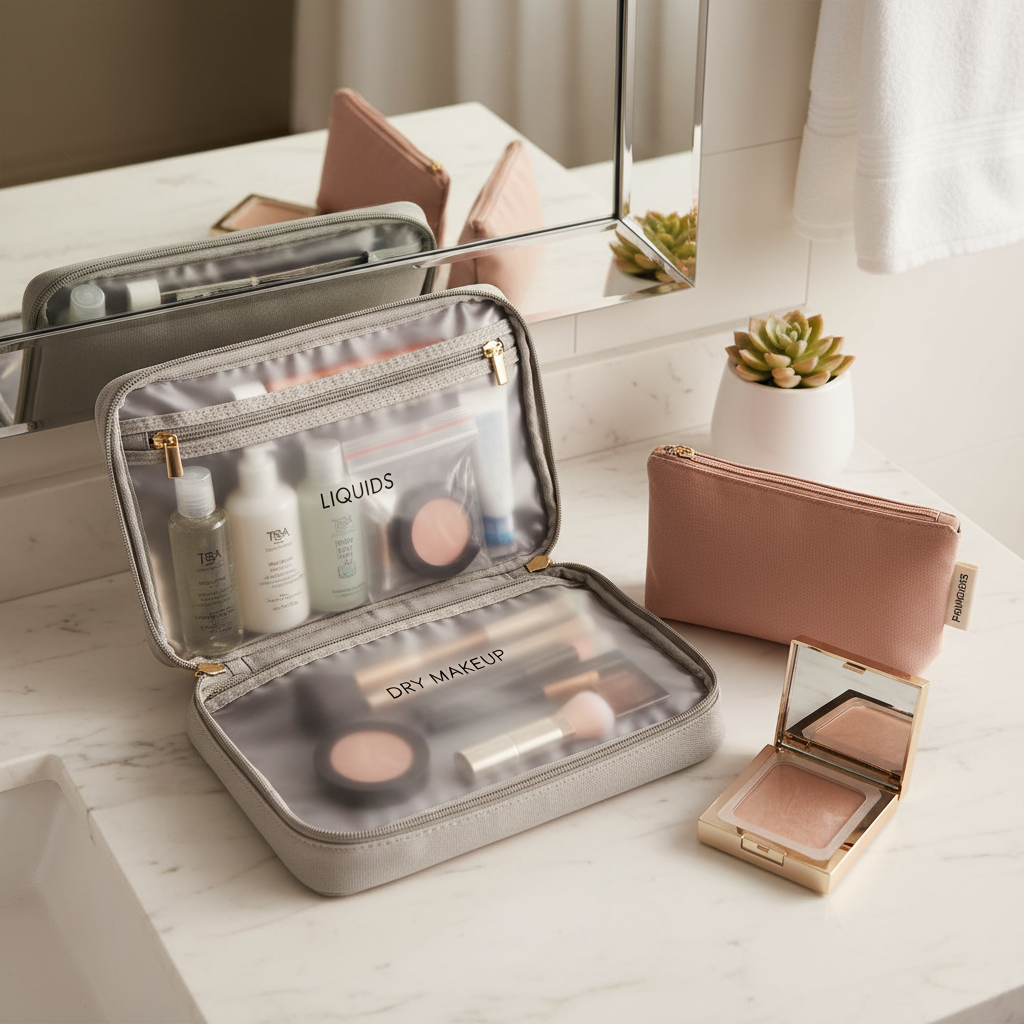
If you’re reorganizing because of leaks, place liquids in a zip pouch even if your bag already has pockets. Bags fail, zippers catch, pressure changes happen on flights, and cleanup time costs more than a simple barrier.
Common mistakes that keep undoing your organization
Many people do the declutter once, feel proud, then slip back because the system depends on motivation. A good setup survives low-energy days.
- Keeping “project pan” items in the bag: great goal, wrong location. Store them outside and rotate intentionally.
- Letting samples roam free: samples need a mini pouch or they become the bag’s confetti.
- No weekly micro-reset: two minutes on Sunday saves you from the 45-minute emergency dig later.
- Not cleaning tools often enough: buildup makes everything feel messy and can irritate skin for some people.
- Organizing by brand, not function: function-based grouping stays useful even when products change.
One more thing, if you keep repurchasing “bigger” bags, pause. In many cases, the bag isn’t the constraint, the number of categories you’re trying to carry is.
When to replace products or ask a pro
Organization overlaps with hygiene, and it’s okay to be cautious here. If a product smells off, changes texture, or keeps irritating your skin, consider replacing it and, if irritation persists, ask a dermatologist or qualified clinician.
According to the FDA, you should not add water or saliva to cosmetics, and you should avoid sharing eye makeup because it can spread infection. If you’re frequently getting eye irritation, it’s worth reviewing mascara age, eyeliner hygiene, and tool cleanliness with professional advice.
Key takeaways (so you can keep it organized)
- Define the bag’s job, touch-ups, daily, gym, or travel.
- Build a core kit and keep “maybe” items outside the bag.
- Create zones so wet, dry, tools, and hygiene stop mixing.
- Contain liquids even if you trust your caps.
- Do a 2-minute weekly reset instead of waiting for chaos.
Once you lock in a core kit and simple zoning, how to organize makeup bag efficiently stops being a constant battle and turns into a small routine you barely notice. Pick your bag’s job, do a quick reset today, and schedule a two-minute check once a week so it stays easy.
If you want the most friction-free result, start by removing five items right now, then rebuild with only what you’d genuinely use tomorrow, that single move usually changes everything.