
Best shoe inserts for comfort women usually come down to one thing: matching the insert to your foot and your shoes, not whatever is “most popular.” If your feet feel tired by mid-day, if your arches ache after errands, or if your heels start burning during a shift, a well-chosen insert can change how your whole body feels by evening.
But inserts are also easy to get wrong. Some feel amazing in sneakers and terrible in flats, some add too much volume, and some “support” is basically a stiff lump that pushes in the wrong spot. The goal here is comfort you can actually wear, not a product that looks impressive in your cart.
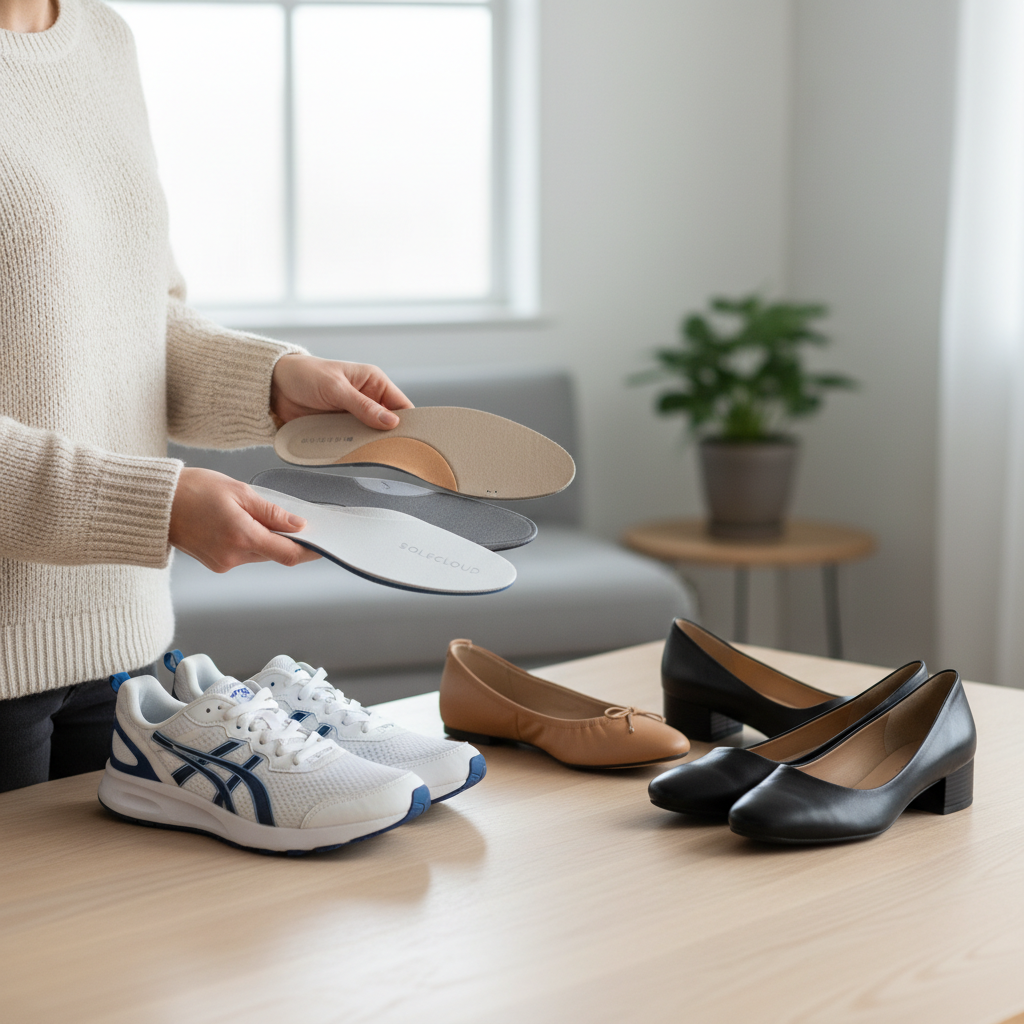
Below is a practical way to choose inserts based on your pain points, shoe type, and daily routine, plus a quick self-check, a comparison table, and a few common mistakes that waste money. If you have persistent pain or a known condition, keep the boundaries in mind and consider a clinician’s input.
Why women often need comfort inserts in the first place
There’s nothing “wrong” with your feet if you want more cushioning or support. In many cases, inserts simply compensate for shoe design and daily load.
- Shoe geometry doesn’t match your foot: Narrow toe boxes, elevated heels, and thin insoles can shift pressure forward and overload the forefoot.
- Long standing or lots of steps: Repetitive impact can irritate the heel pad and the ball of foot, even in good sneakers.
- Arch support mismatch: A very low arch insert can feel useless if you need structure, while a high arch insert can feel like a “rock” if you don’t.
- Volume issues: Many women’s flats, loafers, and fashion sneakers have limited space. A thick insert can create toe pressure, blisters, and numbness.
- Overpronation or supination tendencies: Some feet roll inward or outward. Comfort improves when the insert stabilizes gently rather than forcing correction.
According to the American Podiatric Medical Association (APMA), footwear that fits well and supports the foot can help reduce discomfort, and foot pain that persists should be evaluated by a podiatrist.
Quick self-check: what kind of comfort insert do you actually need?
Before shopping, spend 60 seconds identifying your primary “why.” One insert rarely solves everything equally well.
Pick the closest match
- Heel pain in the morning or after sitting: often benefits from a supportive heel cup plus moderate arch support, not just extra softness.
- Ball-of-foot burning in flats or heels: look for a metatarsal pad or forefoot cushion made for dress shoes.
- General all-day fatigue: a balanced insert with shock absorption and light structure is usually the sweet spot.
- Knee/hip tiredness after walking: consider a more structured insole for alignment and stability, assuming your shoes have enough room.
- Blisters and rubbing: you may need better fit and a thinner top cover, not more padding.
If you’re between two categories, start with the shoe type you wear most. The “best” comfort insert for a running shoe can be a disaster in a slim loafer.
Types of inserts (and where each works best)
Comfort inserts generally fall into a few buckets. Knowing the bucket keeps you from buying the wrong “solution.”
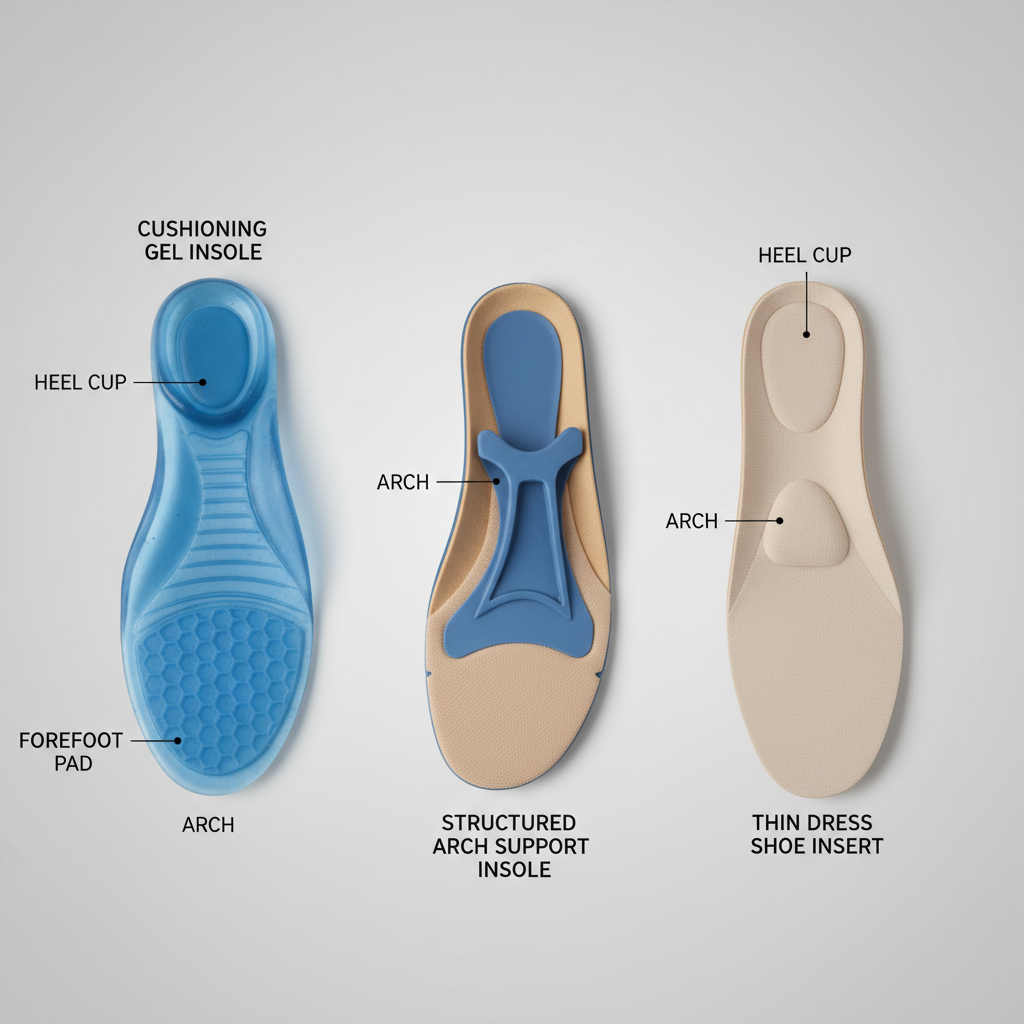
- Cushioning insoles: focus on softness and shock absorption. Great for impact and fatigue, less helpful if you need stability.
- Supportive/structured insoles: firmer arch, heel cup, and sometimes a stabilizing shell. Often better for alignment and repeatable comfort during long days.
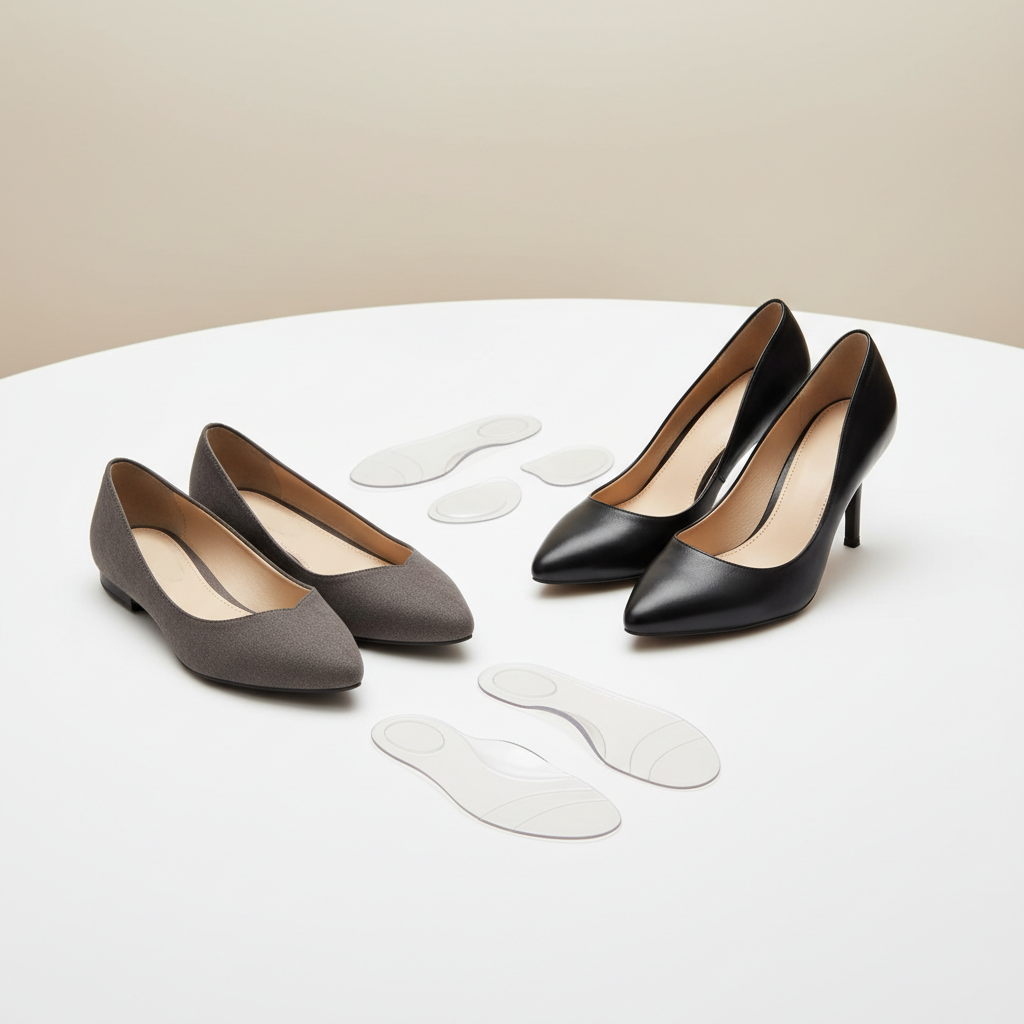
- Dress shoe inserts: thinner, lower-profile materials, sometimes 3/4 length to preserve toe room. Useful for flats, loafers, heels.
- Targeted pads: metatarsal pads, heel cups, or spot cushions. Good when pain is localized and shoe volume is tight.
- Heat-moldable or customizable: can improve “fit feel,” but comfort depends on correct sizing and whether the shoe can accommodate the shape.
Comparison table: choose by pain point, shoe type, and thickness
This table is a fast filter. It won’t replace a fit test, but it cuts out most mismatches.
| Primary goal | Best insert style | Best shoe types | Watch-outs |
|---|---|---|---|
| All-day standing comfort | Supportive insole + cushioning top | Work sneakers, walking shoes, roomy boots | Too thick can cause toe crowding |
| Heel soreness / impact | Deep heel cup, moderate arch, shock-absorbing heel | Sneakers, clogs, supportive work shoes | Very soft-only inserts may bottom out fast |
| Ball-of-foot pressure | Forefoot cushion or metatarsal pad | Flats, heels, dress shoes | Pad placement matters, misplacement can worsen pain |
| Arch fatigue | Contoured arch support (light to firm) | Everyday sneakers, walking shoes | High arches can feel “pokey” for flat feet |
| Loose heel / rubbing | Heel grips or thin full-length liner | Loafers, pumps, fashion sneakers | Often a sizing/fit issue, not a cushioning issue |
How to fit inserts correctly (the part most people skip)
Comfort improves when the insert sits where your foot actually loads. If you rush sizing, even the best shoe inserts for comfort women can feel off.
Step-by-step fitting checklist
- Start with the removable factory insole: if your shoe has one, pull it out and use it as a tracing template.
- Choose the right length: full-length for sneakers and boots, 3/4 length for tight toe boxes.
- Trim slowly: cut small amounts, test, repeat. Keep edges smooth to avoid rubbing.
- Align the arch, not the heel: your arch should “land” on the support. If the bump sits too far forward/back, swap sizes or models.
- Do a 10-minute indoor test: walk stairs, stand still, do a few turns. Hot spots show up quickly.
A small but real tip: if you feel new pressure under the arch that doesn’t fade after a couple of short wears, that’s usually a mismatch, not “breaking in.”
Practical picks by scenario (work, walking, flats, and heels)
Instead of chasing one perfect insert, match comfort to the shoes you actually wear. This is where most shoppers see immediate wins.
For nurses, retail, teachers, and long standing shifts
- Look for structured support with a stable heel cup, plus a cushioned top layer.
- Prioritize durability and moisture management, sweaty insoles can feel uncomfortable even if support is good.
- Roomy shoes matter, a cramped toe box will cancel out most benefits.
For walking, travel, and “10k steps” days
- Balanced cushioning with moderate structure tends to work well, too-soft inserts can feel great at first, then feel unstable later.
- If you do mixed terrain, consider a slightly firmer base for consistent foot placement.
For flats and loafers that feel “hard”
- Use a thin dress insole or a 3/4 insert to preserve toe room.
- If you get ball-of-foot pain, add a low-profile forefoot pad rather than a thick full-length cushion.
For heels (when you still want to wear them)
- Focus on forefoot cushioning and grip to reduce sliding.
- Keep expectations realistic, very high heels change load patterns and inserts can only help so much.
Common mistakes that make inserts feel worse
If you tried inserts before and hated them, one of these is usually the reason.
- Buying thicker to get more comfort: thickness often creates pressure points, especially in women’s dress shoes.
- Expecting “soft” to equal “supportive”: a squishy insole can compress quickly and leave you with less comfort by hour three.
- Ignoring shoe fit: if your shoe is half a size small, an insert can turn “snug” into numb toes.
- Overcorrecting: aggressive arch support can irritate the arch or change your gait in a way your body dislikes.
- Not replacing worn inserts: materials fatigue. If your insert looks flattened or uneven, comfort drops fast.
Key takeaways + when to get professional help
Key points you can act on today:
- Match the insert to the shoe, then refine by pain location and daily activity.
- Arch support should feel “present,” not sharp, and heel comfort should feel stable, not wobbly.
- Fit testing matters, 10 minutes at home can save weeks of annoyance.
If you have persistent pain, numbness, swelling, a history of diabetes or nerve issues, or pain that changes how you walk, it’s smart to consult a podiatrist or qualified clinician. According to the American Orthopaedic Foot & Ankle Society (AOFAS), ongoing foot or ankle pain that limits activity is a reason to seek evaluation, and early assessment can help rule out more serious issues.
For most everyday discomfort, though, the best shoe inserts for comfort women are the ones that fit your most-worn shoes, solve one clear problem, and feel good across a full day, not just the first five minutes.
If you want a simpler path, start with one pair for your “main” shoes, test for a week, then add a second insert type for your dress shoes or heels, that two-insert approach tends to beat hunting for a single miracle option.