
men essential wardrobe pieces 2026 is really a question about avoiding “nothing to wear” mornings without buying a whole new personality every season.
A lot of guys in the U.S. get stuck in the same loop: trendy pieces that don’t mix well, basics that fit “okay,” and a closet that works only for one kind of day. The fix usually isn’t more clothes, it’s fewer better choices that combine easily.
This guide breaks down what to own, how to check what you already have, and how to upgrade in a way that feels modern for 2026 but still works in 2028. You’ll also see practical outfit formulas and a simple shopping plan so you don’t overbuy.
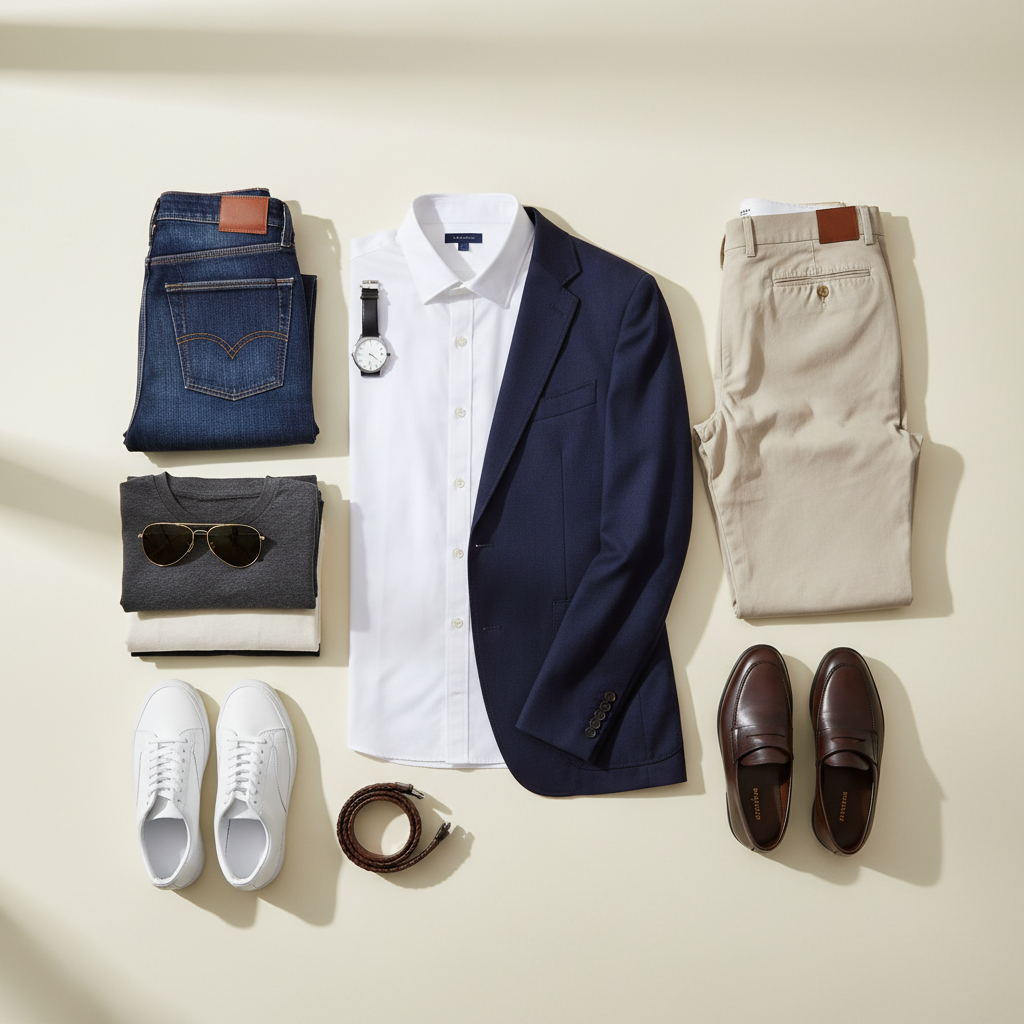
What “essential” means in 2026 (and what it doesn’t)
Essentials aren’t the same as “most popular items.” In 2026, men’s style in the U.S. still leans practical: comfortable fits, better fabrics, and pieces that move between casual office, travel, and weekends.
- Essential usually means high-repeat, easy to pair, and appropriate in more than one setting.
- Not essential means it only works with one outfit, one season, or one vibe you rarely live in.
- Modern doesn’t require loud trends, it often shows up in a slightly updated fit, cleaner lines, and better proportion.
According to GQ, fit and versatility tend to matter more than chasing runway trends, which is basically the “essentials” mindset in a sentence.
The core list: men essential wardrobe pieces for 2026
If you want a closet that covers most American daily life, these categories do the heavy lifting. Think of them as a toolkit; you’ll adjust colors and fabrics to match your climate and job.
Tops
- Premium tees: 2–4 in neutral colors (white, black, heather gray, navy). Look for a collar that doesn’t bacon after washes.
- Oxford or poplin button-down: one white, one light blue; works for office, dinners, and layering.
- Casual shirt: chambray, brushed cotton, or a clean overshirt that can replace a light jacket.
- Layering knit: merino crewneck or a refined sweatshirt that doesn’t look like gym gear.
Bottoms
- Dark denim: no heavy distressing; a modern straight or slim-straight fit usually reads current in 2026.
- Chinos: one pair in tan/khaki or olive, mid-rise, clean hem.
- Tailored trouser: charcoal or navy, especially if your office is “smart casual” or you travel for work.
- Shorts: one clean pair (5–7 inch inseam is common), not cargo-heavy unless that’s your actual style lane.
Outerwear
- Unstructured blazer: feels less stiff than traditional suiting, still sharp for meetings and dates.
- Light jacket: bomber, chore coat, or denim jacket in a simple color.
- Weather piece: a rain shell or trench, depending on your region.
Shoes
- Minimal leather (or leather-like) sneakers: clean, low-profile.
- Loafers or derbies: for dress-up moments without going full “wedding guest” every week.
- Boots: a simple Chelsea or service boot for fall/winter.
Accessories
- Leather belt: match your main dress shoe color.
- Watch: doesn’t need to be expensive, just proportionate and not overly sporty for daily wear.
- Bag: a structured backpack or tote that looks decent with a blazer.
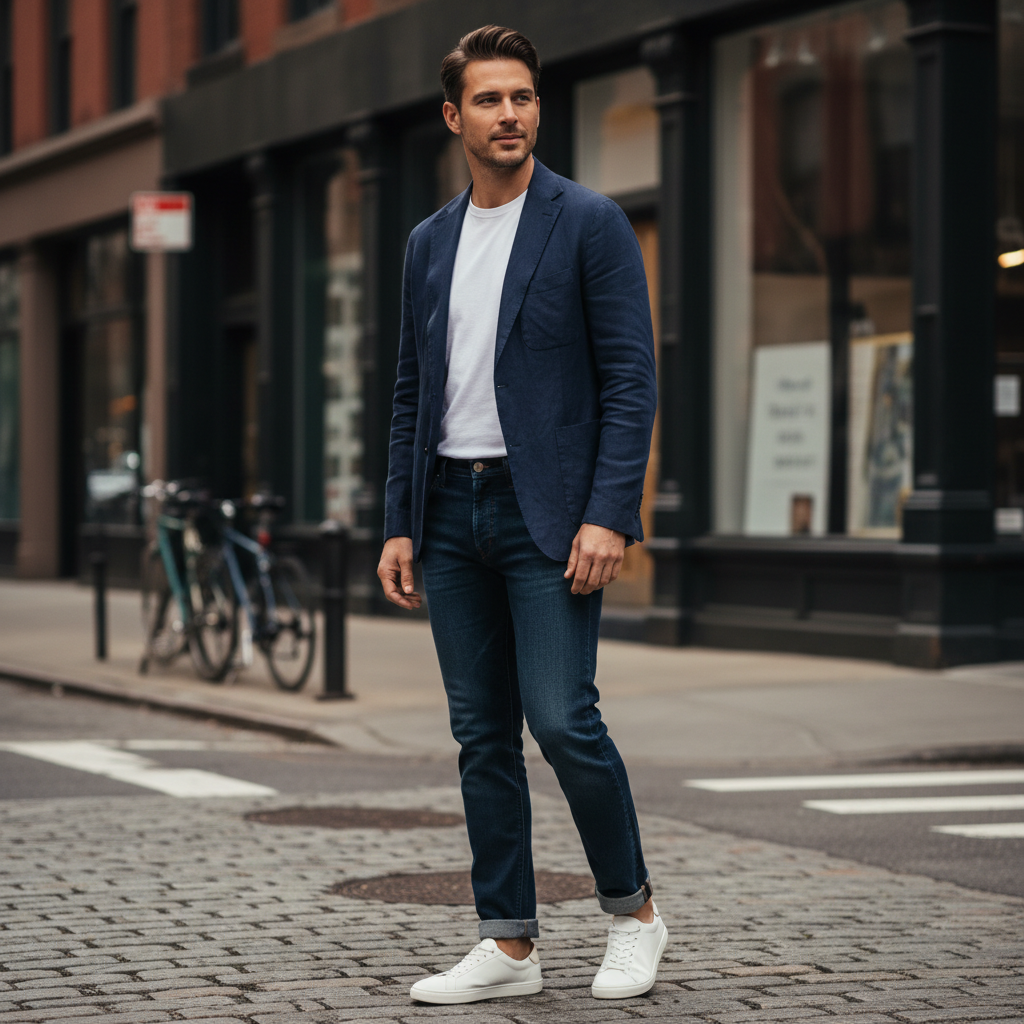
A quick self-audit: what to keep, tailor, replace
Before you shop, do a fast audit. Most “wardrobe problems” are fit problems, and you can’t out-shop bad proportions.
- Fit check: shoulder seams sit on your shoulder bone, not down your arm; pants don’t collapse into extra fabric at the ankle.
- Fabric check: tees feel thin and twist after washing, sweaters pill fast, shirts wrinkle into chaos within an hour.
- Color check: your closet has too many “statement” colors and not enough neutrals to connect outfits.
- Reality check: you own three “going out” jackets but you mostly go to work, brunch, and airports.
If a piece is good quality but slightly off, tailoring is often the cheapest upgrade. According to The Business of Fashion, consumers keep paying more attention to longevity and value, and tailoring is one of the few ways to improve both without buying new.
The 2026 essentials table: capsule counts and best-use
Use this as a starter plan. If you wear a uniform for work or live in extreme weather, adjust counts up or down.
| Category | Recommended count | Best-use situations | Buy note |
|---|---|---|---|
| Neutral tees | 2–4 | Everyday, layering | Prioritize collar + fabric weight |
| Button-down shirts | 2–3 | Office, dinner, travel | Choose wrinkle-resistance if you travel |
| Dark denim | 1–2 | Casual to smart casual | Skip heavy fading for versatility |
| Chinos/trousers | 2 | Office, events, dates | Hem length matters more than brand |
| Light jacket + blazer | 2 | Layering, meetings | Unstructured blazer feels current |
| Everyday shoes | 2–3 | Work, weekends, travel | Rotate pairs to extend lifespan |
How to build outfits fast: 5 reliable formulas
When people ask for men essential wardrobe pieces 2026, what they usually want is fewer decisions. Outfit formulas reduce decision fatigue and make your closet feel “bigger.”
- Formula 1 (smart casual default): tee + unstructured blazer + dark denim + clean sneakers.
- Formula 2 (office-ready without a suit): oxford shirt + chinos + loafers/derbies + light jacket.
- Formula 3 (travel uniform): merino knit + tailored trouser + minimal sneaker + weather shell.
- Formula 4 (weekend clean): overshirt + tee + straight-leg jeans + boots.
- Formula 5 (warm weather): short-sleeve button-up + clean shorts + low-profile sneaker.
Small modern tweaks matter: a slightly roomier top with a cleaner hem, pants with a straighter line, and shoes that don’t look worn out from ten feet away.
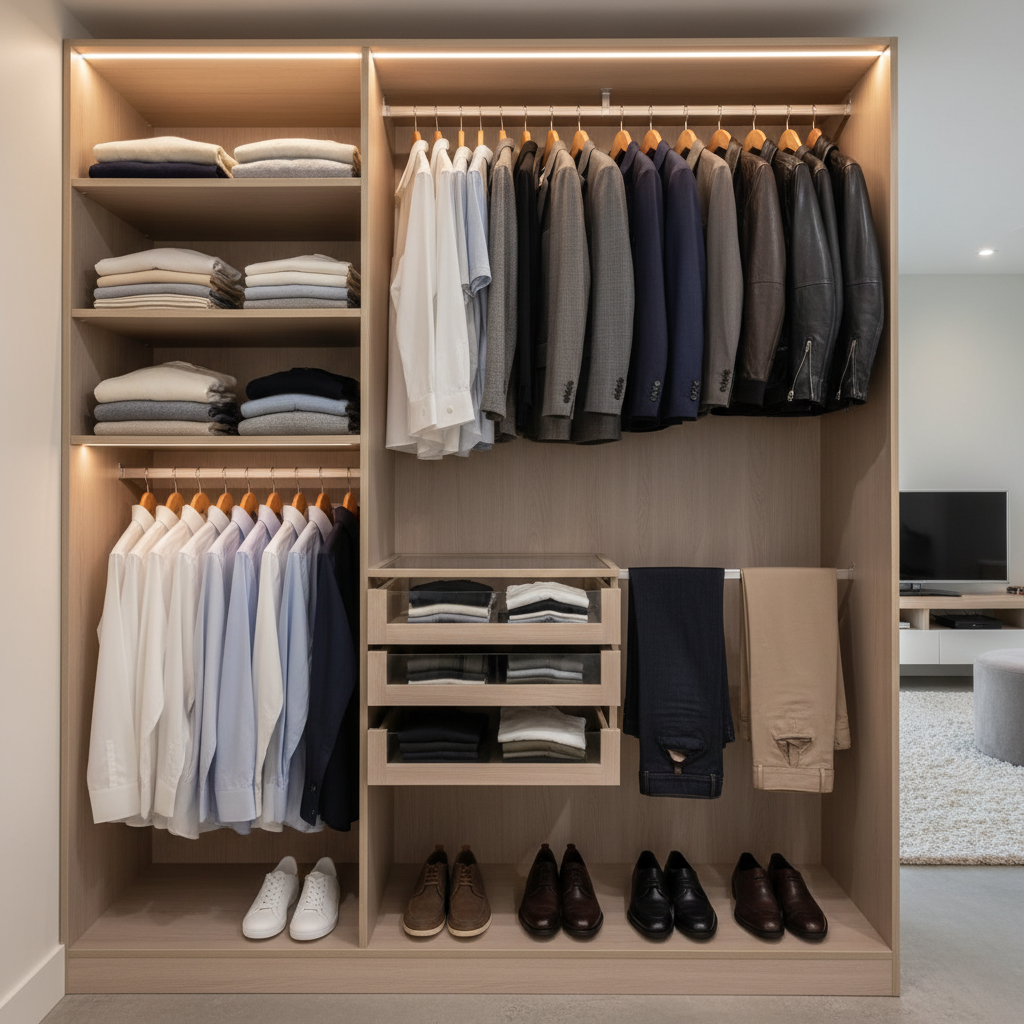
Shopping strategy: spend where it shows, save where it doesn’t
You don’t need a luxury budget, but you do need a plan. The typical mistake is spending on visible “status” items while ignoring fit, fabric, and shoes.
Spend a bit more on
- Shoes: comfort and materials show quickly; rotation helps them last.
- Outerwear: people notice it first, and it anchors your silhouette.
- Knitwear (especially merino): it layers well and often holds shape better.
Save smart on
- Tees: buy fewer, replace when collars and hems degrade.
- Trend pieces: if you want one, keep it cheap and keep it separate from your “core.”
Key point: if a piece doesn’t work with at least three outfits you can name right now, it’s probably not an essential purchase.
Common mistakes (that quietly wreck a “minimal” wardrobe)
- Buying duplicates that aren’t actually duplicates: three black tees in three different fits will look messy, not intentional.
- Ignoring hemming: pants stacking at the ankle makes even expensive clothes feel sloppy.
- Overcorrecting into “too basic”: essentials should feel like you, not a generic mannequin.
- Wrong jacket weight: a heavy coat in a warm climate becomes closet dead weight.
- Keeping uncomfortable shoes: if they hurt, you won’t wear them; a podiatrist or footwear specialist might help if pain is frequent.
According to the Federal Trade Commission (FTC), it’s worth paying attention to care labels and fiber content when you shop, especially online, so you know what you’re actually getting and how to maintain it.
Practical next steps: a 30-day wardrobe upgrade plan
If you want action without overwhelm, run this in four weeks. Keep it boring on purpose, boring is how you win here.
- Week 1: closet audit, pull out anything that doesn’t fit, list gaps you feel during real weekdays.
- Week 2: tailor 1–3 items you already like, hem pants, adjust shirt fit.
- Week 3: replace the “daily drivers” first: shoes or tees that look tired, one pair of pants that fits perfectly.
- Week 4: add one anchor layer (blazer or jacket) and stop; wear-test for two weeks before adding more.
If your wardrobe needs to match a strict dress code, frequent formal events, or specific body-fit challenges, a stylist or a good tailor can be worth the money, and it’s usually faster than endless returns.
Conclusion: keep it modern, keep it wearable
The easiest way to nail men essential wardrobe pieces 2026 is to treat essentials like infrastructure: a small set of high-repeat items, in a cohesive palette, with fit you don’t argue with in the mirror.
Pick one category to fix this week, usually shoes or pants, then build outward using the outfit formulas above. Your closet starts feeling “new” long before it gets bigger.
FAQ
What are the top men essential wardrobe pieces for 2026 if I work remote?
Prioritize clean tees, an overshirt, one sharp pant (dark denim or chinos), and a jacket that upgrades video calls fast. You want comfort, but still a “put together” outline.
How many essentials do I actually need for a capsule wardrobe?
Many guys do well with 20–30 core items excluding gym clothes. The number matters less than whether everything mixes without effort.
Are slim jeans still okay in 2026?
They can work if they’re slim-straight, not painted-on. The more common look is a straighter leg with cleaner drape, especially with modern sneakers and boots.
What colors should I pick for a versatile men’s wardrobe?
Start with navy, gray, white, and olive or tan. Add one accent color you genuinely wear, not a “someday” color that stays on the hanger.
How do I know if an item is worth tailoring?
If the fabric feels solid and the fit issue is simple (hem, waist, sleeve length), tailoring often makes sense. If shoulders are wrong or the garment twists, replacement is usually easier.
What shoes cover most situations with the fewest pairs?
A clean minimal sneaker plus a loafer or derby gets you far, then add a boot if your climate needs it. Keep them in neutral colors so they match your belt and outerwear.
How do I shop essentials without overspending?
Buy one item at a time, and only after you can name three outfits it completes. If you’re unsure, wait a week, the “essential” feeling often fades.
If you’re trying to rebuild your closet for 2026 and you’d rather not guess, a simple approach is to start with a tight color palette and a short “replace list,” then add one anchor layer that makes your everyday outfits look intentional.