
The best setting spray for long lasting makeup is the one that matches your skin type, your base products, and the conditions you wear makeup in, heat, humidity, long shifts, or just a normal day that still ends with shine and fading.
People usually buy a “long-wear” mist and expect magic, then wonder why foundation still separates around the nose or blush disappears by lunch. Most of the time, it’s not that setting sprays don’t work, it’s that the formula and the routine don’t match the problem.
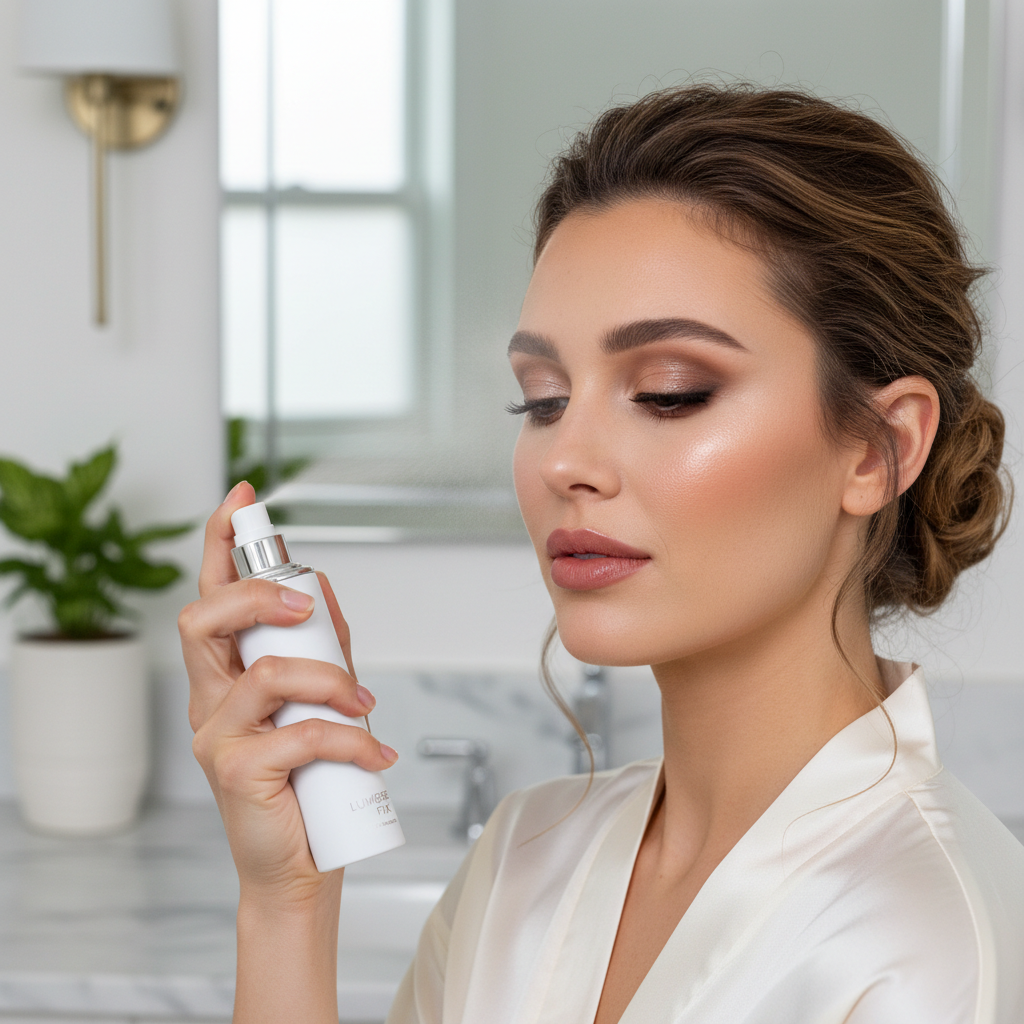
This guide breaks down what “long lasting” really means, how to spot marketing fluff, and how to choose a spray that fits oily skin, dry skin, texture, or sensitivity. You’ll also get a quick comparison table, a self-check list, and a step-by-step application method that tends to make the biggest difference.
What “long lasting” really means for setting spray
Setting spray can help makeup last longer, but it’s usually doing one of two jobs, sometimes both.
- Setting: helps powders and creams look more “melted” into skin, reduces chalky or cakey finish.
- Fixing: forms a lightweight film that improves wear, reducing transfer, fading, and breakdown.
Many “dewy” mists feel amazing but mainly improve finish, they may not hold up for a 10-hour day. Many true long-wear formulas feel a touch tighter on skin because of film-formers, that’s often where the staying power comes from.
According to the U.S. Food and Drug Administration (FDA), cosmetics should be used as labeled and consumers should stop using products that cause irritation, which matters here because long-wear sprays sometimes include more alcohol or stronger film-forming ingredients.
Why your makeup still breaks down (and what the spray can and can’t fix)
If your base slides off, it helps to identify the failure point before you hunt for the best setting spray for long lasting makeup.
- Too much skincare under makeup: heavy creams or oils can keep base from gripping, spray won’t fully “lock” that down.
- Primer/foundation mismatch: silicone-heavy primer with very water-based foundation can pill or separate.
- Over-powdering or under-powdering: both can cause wear issues, either cracking or quick shine-through.
- Humidity + heat: sweat and oil soften layers, you may need blotting plus a true fixing spray.
- Touching your face: even strong sprays struggle against constant friction and transfers.
A good spray improves the odds, but the biggest wins usually come from pairing it with the right base prep, thin layers, and strategic powder placement.
Quick comparison table: what to look for by skin type and finish
Use this as a shopping filter. You can find the “right” formula across drugstore and prestige, the label matters less than the function.
| Skin type / goal | Best finish | Ingredient cues (common) | Watch-outs |
|---|---|---|---|
| Oily, makeup slides | Natural-matte | Film-formers, oil-control polymers | Can feel tight, may emphasize dry patches |
| Dry, makeup looks powdery | Natural-dewy | Humectants (like glycerin), soothing additives | Too dewy can shorten wear in T-zone |
| Combo, long workday | Natural | Balanced film-formers + light hydration | May still need targeted powder |
| Textured skin, makeup separates | Soft-focus natural | Fine-mist sprayers, smoothing polymers | Heavy layers can make texture more obvious |
| Sensitive, sting-prone | Natural | Alcohol-free options, fragrance-free where possible | Less “grip” sometimes, patch test helps |
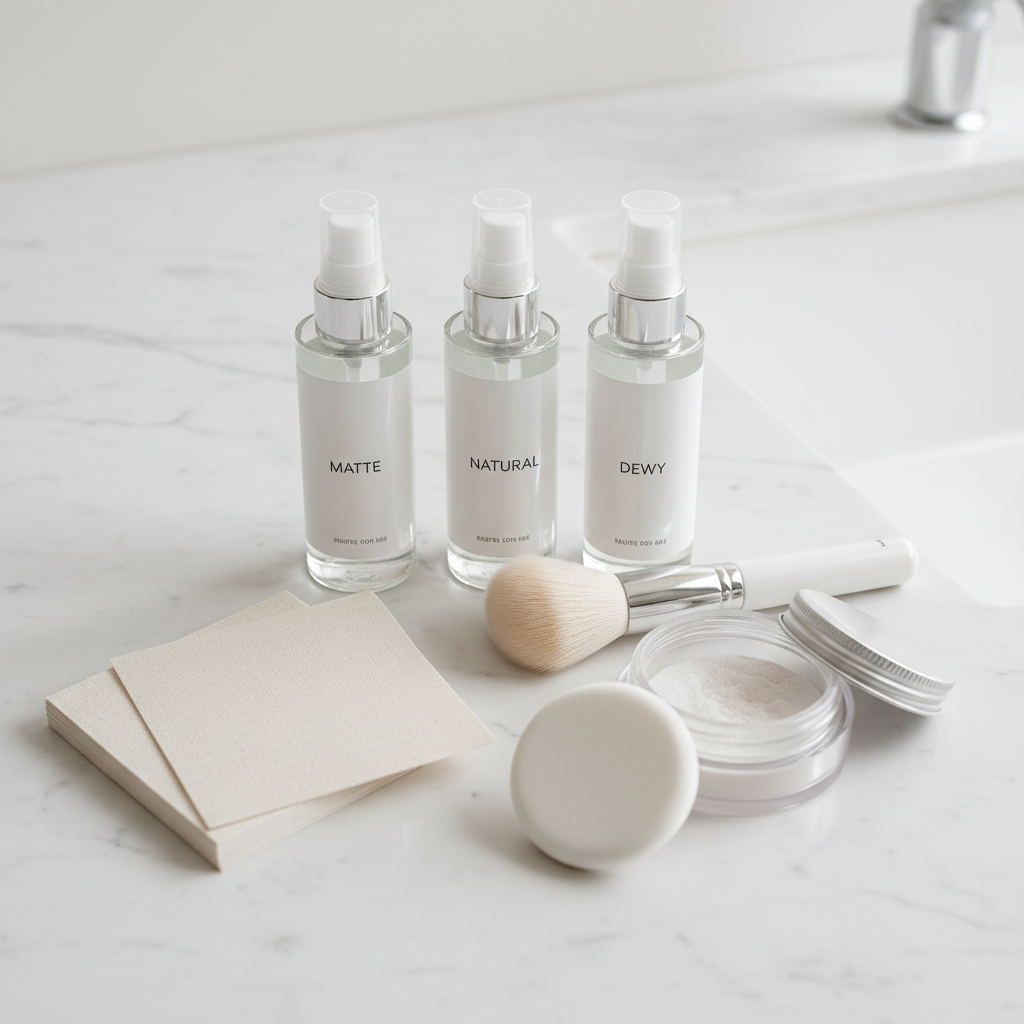
Key point: the sprayer quality matters more than people think. A super fine mist lays evenly, a chunky spray creates wet spots that can disturb foundation.
Self-check: are you actually shopping for a “setting” spray or a “fixing” spray?
This is where many routines go sideways. Answer quickly and be honest.
- If your makeup looks dry, powdery, or sits on top of skin, you probably need more setting (finish refinement).
- If your makeup transfers to masks, collars, or phone screens, you probably need more fixing (wear and transfer help).
- If your T-zone melts but cheeks look fine, you likely need targeted powder plus a balanced spray.
- If your base separates around the nose and mouth, check skincare/primer first, then use spray to reinforce.
If you’re sensitive or sting-prone, add one more check: do alcohol-heavy mists make your face feel hot or tight? If yes, lean toward gentler formulas and rely more on technique.
How to choose the best setting spray for long lasting makeup (without overthinking it)
You don’t need to memorize ingredient decks, but a few cues help you buy smarter.
1) Pick your wear priority
- Transfer resistance: look for “long-wear,” “transfer-resistant,” “fixing,” “up to X hours” claims, then verify with real-world testing at home.
- Oil control: “matte,” “shine control,” “oil absorbing,” typically better for humid climates or oily T-zone.
- Skin-like finish: “natural,” “skin finish,” “hydrating,” usually better if makeup turns cakey.
2) Match it to your base products
If you wear mostly creams and liquids, a true fixing mist can reduce movement. If you bake heavily or use lots of powder, a setting mist that rehydrates the surface often looks better, then a lighter fixing layer can go on top.
3) Consider comfort and sensitivity
Fragrance and higher alcohol content can be fine for many people, but if your skin reacts easily, patch testing is worth the extra minute. According to the American Academy of Dermatology Association (AAD), patch testing can help identify products that trigger contact dermatitis in some people.
Application routine that usually makes spray “actually work”
Most complaints come from using too little, too close, or only at the very end. Try this method for a week before you decide the product failed.
- Step 1: Prep, then wait — let sunscreen and moisturizer set for a few minutes, makeup sticks better when the surface isn’t slippery.
- Step 2: Thin base layers — long wear comes from several thin layers, not one thick one.
- Step 3: Spray between layers (optional but helpful) — a light mist after foundation, then again after powders, often improves longevity.
- Step 4: Distance and pattern — hold about 8–12 inches away, spray in an X then a T pattern, aiming for an even fog, not wet dots.
- Step 5: Hands off — let it air dry; fanning or rubbing can create patchiness.
Pro tip that sounds boring but helps: blot oil first, then re-spray lightly. Spraying over oil can trap shine and make texture more noticeable.
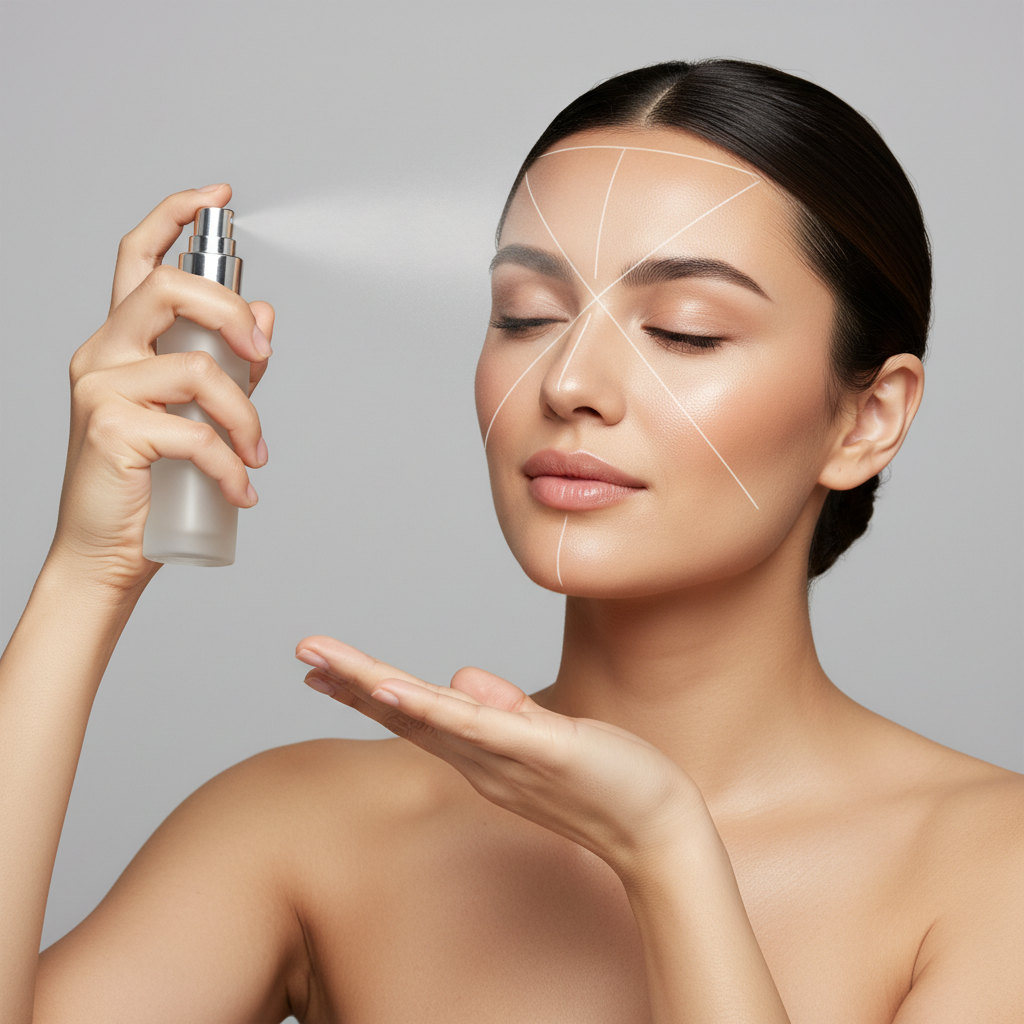
If you wear makeup in extreme heat, add a practical step: carry blotting sheets or a clean tissue. Take down sweat and oil first, then touch up. This combo often beats piling on more powder.
Mistakes that make long-wear sprays look worse
These are common, and they’re fixable.
- Spraying too close: creates droplets that “eat” foundation and leave spots.
- Soaking the face: more product doesn’t mean more hold, it can re-wet layers and cause separation.
- Using only spray to solve oil: for very oily skin, strategic powder and blotting still matter.
- Mixing too many grippy layers: ultra-grip primer + heavy foundation + strong fixing spray can feel tight and exaggerate texture.
- Ignoring tool hygiene: dirty sponges and brushes can break down base faster and cause patchiness.
If your finish turns crusty, you might be using a matte spray over a very powdered base. Swap to a more natural finish mist, or spray earlier in the routine and use less powder.
When it makes sense to get professional help (or at least patch test)
If a spray stings, causes redness, or triggers flaking that doesn’t calm down, stop using it and consider talking with a dermatologist, especially if you have eczema, rosacea, or known fragrance sensitivities. Eye irritation is also a reason to be cautious, keep eyes closed, avoid spraying too close, and follow label directions.
For weddings, film shoots, or events where touch-ups are tough, a makeup artist can tailor the whole system, skincare, primer, base, powder, and spray, which usually matters more than hunting for one “holy grail” bottle.
Conclusion: a realistic way to find your best long lasting setting spray
The best setting spray for long lasting makeup is rarely “the most famous one,” it’s the one that supports your specific failure point, oil, transfer, dryness, or texture. A solid routine, thin layers, correct distance, and a light re-spray after blotting usually deliver the biggest jump in wear.
If you want a simple next step, choose a finish that matches your skin type, test it across two normal days and one “hard mode” day, heat, commute, long meetings, and keep notes on where makeup breaks down. That little bit of tracking beats guesswork, every time.
FAQ
- What is the best setting spray for long lasting makeup for oily skin?
Look for a natural-matte or oil-control fixing spray and pair it with targeted translucent powder on the T-zone. If oil is intense, blot once mid-day before re-spraying lightly. - Will setting spray stop makeup from transferring to masks or clothes?
It can reduce transfer, but it rarely eliminates it completely. Transfer resistance improves most when you set cream products with a thin powder layer and let spray dry fully. - Should I use setting spray before or after powder?
Many routines work best with both: a light mist to help layers fuse, then powder, then a final mist to lock and remove the overly-powdered look. If you’re very dry, prioritize the mist after powder. - Why does my foundation separate when I use setting spray?
Common causes include spraying too close, over-applying, or having a slippery skincare layer underneath. Try less product, more distance, and give skincare time to absorb before base. - Is alcohol in setting spray bad for skin?
Not automatically, but it can feel drying or irritating for some people, especially with frequent use. If you notice stinging or tightness, consider alcohol-free options and patch test. - Can I use setting spray to refresh makeup during the day?
Yes, but blot first. Spraying onto oil or sweat can make texture look heavier, a quick blot and a light mist usually refreshes better. - Do I still need primer if I use a long-wear setting spray?
Often yes, but not always. If you already get good grip from your base and spray, primer can be optional, especially if layering makes texture worse.
If you’re trying to simplify your routine, it often helps to treat your spray as part of a system: prep that fits your skin, base that plays well together, then a mist applied with intention. If you want, tell me your skin type, climate, and what breaks down first, I can help narrow what to look for without turning your counter into a product graveyard.