
best jewelry for women minimalist usually means pieces you can wear on repeat, that sit close to the body, don’t snag, and still look intentional even with a plain tee or a blazer.
The tricky part is that “minimalist” gets used for everything from ultra-thin chains to chunky “simple” hoops, and online photos rarely tell you what matters in real life, like weight, clasp security, or whether a finish will look brassy after a few months.
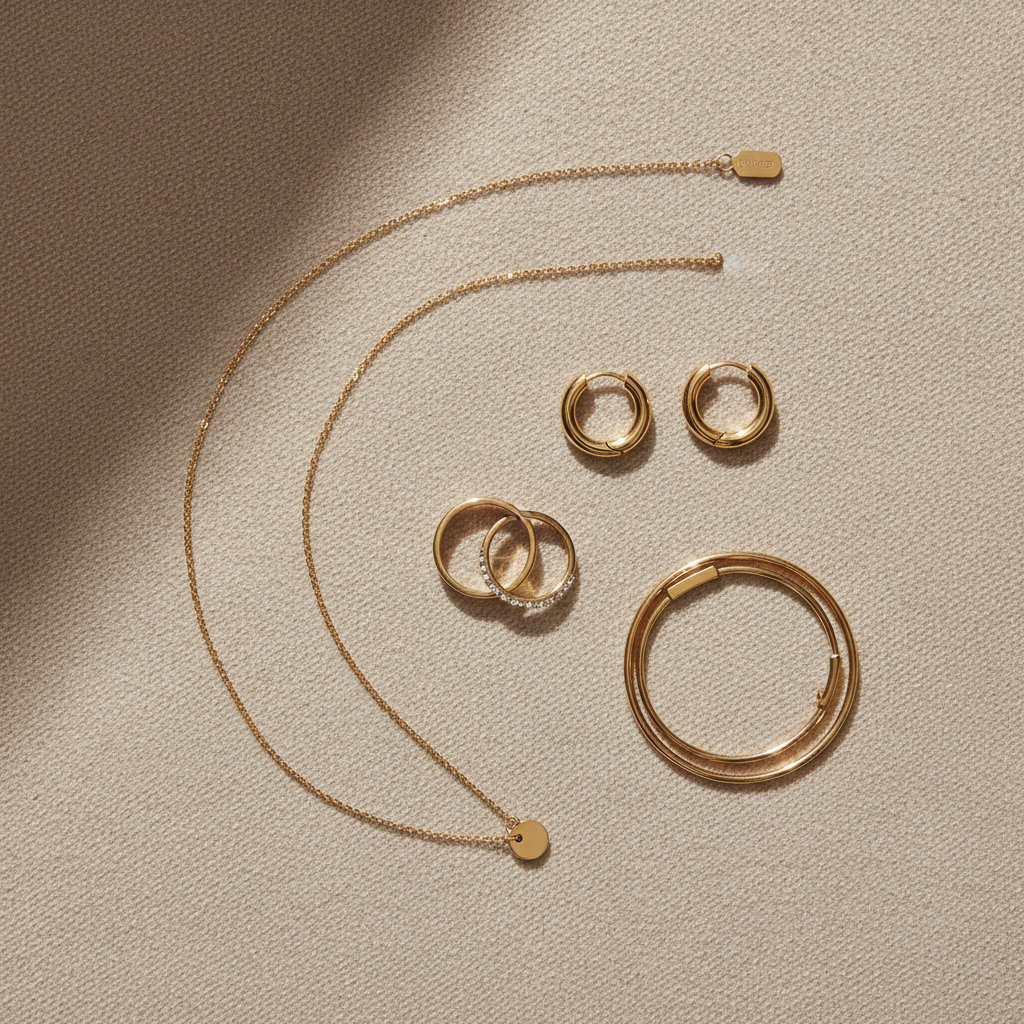
This guide narrows it down to the pieces that earn their keep, how to choose materials for sensitive skin and daily wear, and a simple buying checklist so you don’t end up with “minimal” jewelry that lives in a drawer.
What “minimalist jewelry” actually means (and what it doesn’t)
Minimalist jewelry is less about being tiny and more about being clean in silhouette, easy to pair, and visually calm. Think one focal line, a subtle shape, or a small sparkle that reads polished, not loud.
What it usually is:
- Simple geometry: bars, discs, tiny solitaires, slim hoops
- Wearable proportions: pieces that don’t flip, twist, or snag easily
- Repeat-friendly: works with casual, workwear, and dressier outfits
What it often isn’t (even if marketed that way): overly thin chains that kink, “dainty” rings that warp, or finishes that look yellow or dull quickly.
Why women keep coming back to minimalist pieces
Most people aren’t trying to build a jewelry museum. They want a small set that looks good in photos, holds up to commuting, and still feels like themselves on a low-effort day.
Minimalist styles tend to win because they:
- Layer easily without looking busy
- Travel well (fewer tangles, less “what do I wear with this?”)
- Work across dress codes, from jeans to business casual
And yes, it can be a cost saver. When you buy the right basics once, you stop impulse-buying trend pieces that only match one outfit.
Materials that matter: gold, silver, vermeil, and “hypoallergenic” claims
Material choice is where “best” gets personal. Skin sensitivity, climate, and how often you wear pieces all change the answer.
Quick, practical material guide:
- 14k gold: a common sweet spot for daily wear, good durability, typically better for sensitive skin than mystery alloys.
- 18k gold: richer color, often a bit softer, great for earrings and necklaces, rings may scratch more depending on lifestyle.
- Sterling silver (925): bright and classic, can tarnish, but easy to clean.
- Gold vermeil: thick gold layer over sterling silver; can be a solid value, but longevity depends on plating thickness and your wear habits.
- Gold-plated: usually the most affordable, but frequent wear plus sweat, lotion, and friction can wear it down faster.
About “hypoallergenic”: it’s not a tightly standardized promise across every brand. According to American Academy of Dermatology, nickel is a common cause of allergic contact dermatitis, so if you react to earrings or clasps, it’s worth avoiding nickel-containing alloys and considering a dermatologist if reactions persist.
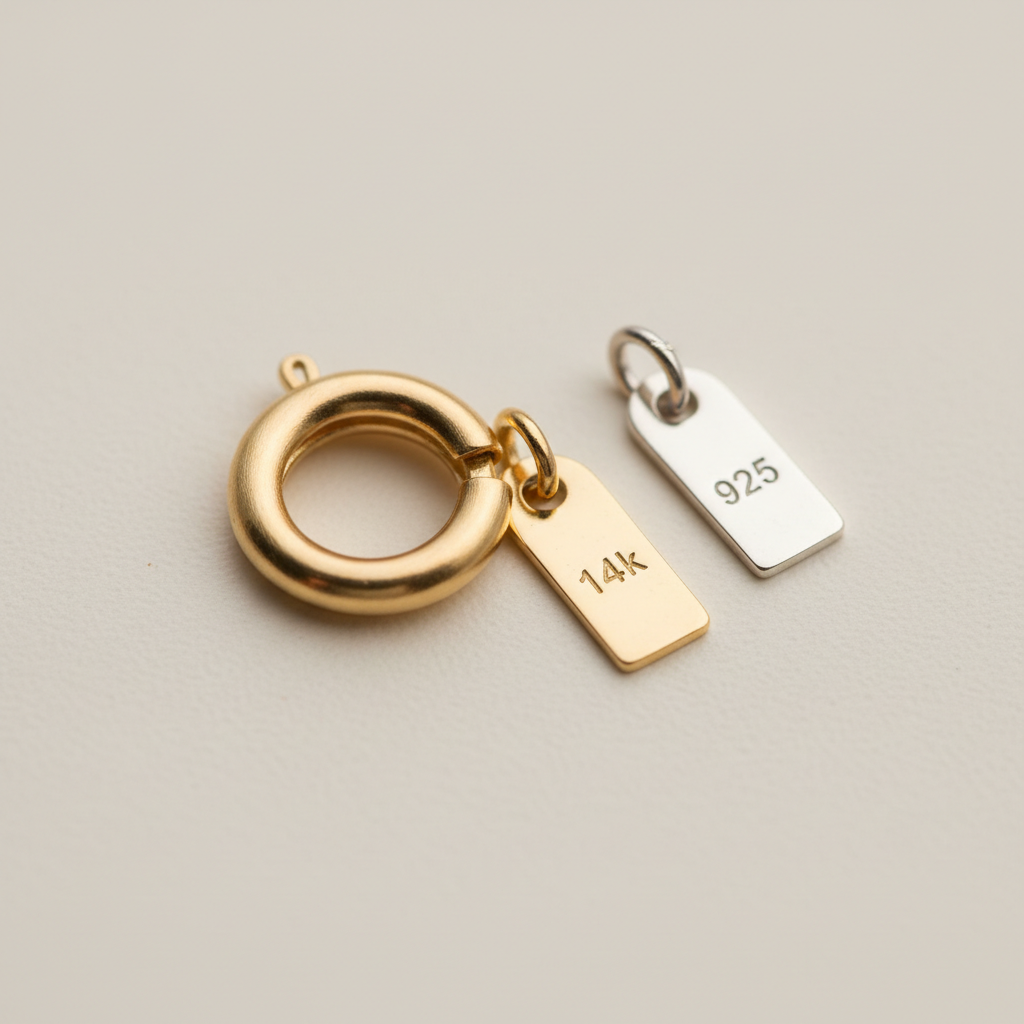
Key takeaway: if you want minimalist jewelry you forget you’re wearing, prioritize trustworthy metals and comfortable closures over “cute” photos.
The core minimalist jewelry set (the pieces that do the most work)
If you’re building from scratch, aim for a small “capsule” you can mix without thinking. In many closets, these give the best cost-per-wear.
1) A thin chain necklace (your daily anchor)
- Length: 16–18 inches is a common everyday range; 20 inches layers well.
- Look for: secure clasp, smooth links, a chain that doesn’t flip constantly.
2) Small hoops or huggies (the no-brainer earring)
- Look for: comfortable hinge, no sharp posts, lightweight feel.
- If you sleep in them: huggies often feel less pokey than studs.
3) Simple studs (for days you want “invisible polish”)
- Tiny solitaire, bezel set, or flat disc studs read clean and modern.
- Comfort matters more than sparkle size if you wear them long hours.
4) One stacking ring (or a slim band)
- Choose a width you won’t fuss with: very thin rings can bend if you’re hard on hands.
- Consider a slightly rounded interior for comfort fit.
5) A slim bracelet (optional, but surprisingly useful)
- Chain bracelets look refined, bangles feel more “present.”
- Prioritize an adjustable length so it doesn’t slide into your palm.
How to pick the best minimalist jewelry for your lifestyle (a quick self-check)
Before you buy, it helps to be honest about how you actually live in jewelry. This is where a lot of “best jewelry for women minimalist” searches land: you want it to look effortless, but it also has to survive your week.
- You wear jewelry daily: consider 14k gold or sterling silver, and avoid ultra-thin chains that kink.
- You shower/work out in jewelry: you may want fewer plated pieces; sweat and soap can shorten plating life.
- You’re sensitive to metals: favor higher-karat gold, sterling silver, or clearly stated nickel-free specs, and patch-test when possible.
- You’re rough on rings: pick a slightly thicker band, skip high-profile stones that snag.
- You hate maintenance: choose finishes and shapes that hide micro-scratches and don’t require constant polishing.
If more than one bullet describes you, that’s normal. The “right” minimalist set is usually a compromise between aesthetics and friction points.
A simple buying checklist (so you don’t get fooled by photos)
Product pages are optimized to sell, not to prevent annoyance. Here’s what I’d verify before clicking buy.
- Metal type and base: not just “gold,” but 14k solid, vermeil over sterling, or plated over brass.
- Measurements: chain thickness (mm), hoop diameter (mm), ring band width.
- Closure details: lobster clasp vs spring ring, hinge quality for huggies.
- Return policy: especially for earrings, policies vary for hygiene reasons.
- Care instructions: a brand that explains care clearly is often a better sign than vague marketing.
Quick comparison table to keep expectations realistic:
| Material | Typical feel | Maintenance | Best for |
|---|---|---|---|
| 14k Gold | Durable, balanced color | Low | Daily chains, hoops, stacking rings |
| Sterling Silver | Bright, cool-toned | Medium (tarnish care) | Minimal studs, statement-simple cuffs |
| Gold Vermeil | Gold look, midweight value | Medium (avoid harsh exposure) | Occasional daily wear, gifts |
| Gold-Plated | Light, affordable | Higher (plating wear) | Trend testing, low-frequency wear |
Styling formulas that look intentional (without trying too hard)
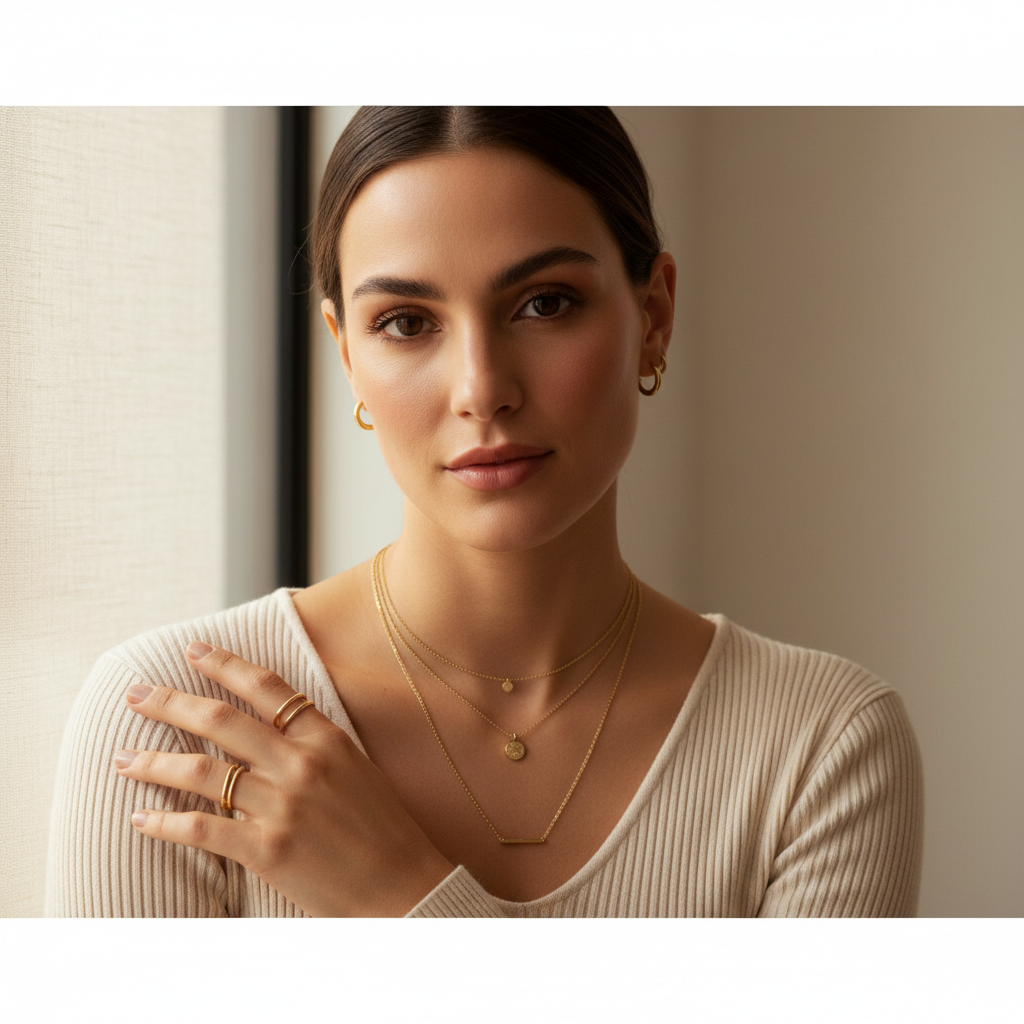
Minimalist jewelry can look “unfinished” if every piece is equally tiny and spread out. The fix is to use a simple formula: one anchor plus one supporting piece.
Easy formulas
- Neck focus: thin chain + small pendant, add studs.
- Ear focus: small hoops + no necklace, add a slim bracelet.
- Layer focus: 16-inch chain + 18/20-inch chain, keep earrings simple.
Mixing metals without looking random
- Keep shapes consistent, mix only the color.
- Repeat the “minor” metal at least twice, like silver hoops plus a silver ring.
Key point: if you want that clean Instagram look, spacing matters more than adding extra items.
Common mistakes (and what to do instead)
- Buying too thin: very delicate chains and rings can kink or bend. Choose slightly thicker if you wear pieces daily.
- Ignoring hardware: clasps, hinges, and posts decide comfort. Read reviews that mention closures, not just “so pretty.”
- Assuming “waterproof” means forever: exposure to chlorine, saltwater, lotions, and sweat can still dull finishes, especially plating.
- Over-layering: two well-chosen layers look cleaner than four chains fighting each other.
If you keep striking out, it’s rarely your taste, it’s usually a mismatch between your routine and the material choice.
When it’s worth getting expert help
If you get recurring rashes, swelling, or persistent irritation from earrings or necklaces, consider stopping wear and speaking with a medical professional. Skin reactions can have multiple triggers and guessing can keep you stuck.
For fit and durability, a reputable local jeweler can also help you pick chain thickness, adjust lengths, and check clasps, especially if you want a small everyday set that lasts.
Conclusion: build a small set you actually wear
The “best” minimalist pieces are the ones you reach for without thinking, they sit right, feel comfortable, and keep their look through normal life. If you take nothing else from this guide, do two things: decide your everyday metal based on sensitivity and routine, then buy one anchor piece at a time instead of chasing a full set in one cart.
If you’re shopping this week, start with a chain you love and earrings you can wear all day, everything else becomes easier after that.
Key takeaways
- Minimalist means clean shapes and repeat wear, not just “small.”
- Materials and closures matter more than photos.
- Build a capsule: chain, hoops/huggies, studs, slim ring, optional bracelet.
- Use simple styling formulas to look intentional with fewer pieces.
If you need a more streamlined way to choose best jewelry for women minimalist, look for brands that clearly list metal specs, measurements, and care guidance, and keep your first order small so you can test comfort and wear before committing.