
Best sweaters for women oversized usually come down to three things you can actually feel the moment you put one on, the knit has to be comfortable, the proportions need to look intentional, and the fabric should hold up after a few washes.
If you have ever ordered an “oversized” sweater that turned into a shapeless tent, or worse, felt scratchy by hour two, you already know why this category is tricky. Oversized is a styling choice, not a sizing accident, and small details like shoulder seams, hem length, and fiber blend decide whether it reads polished or sloppy.
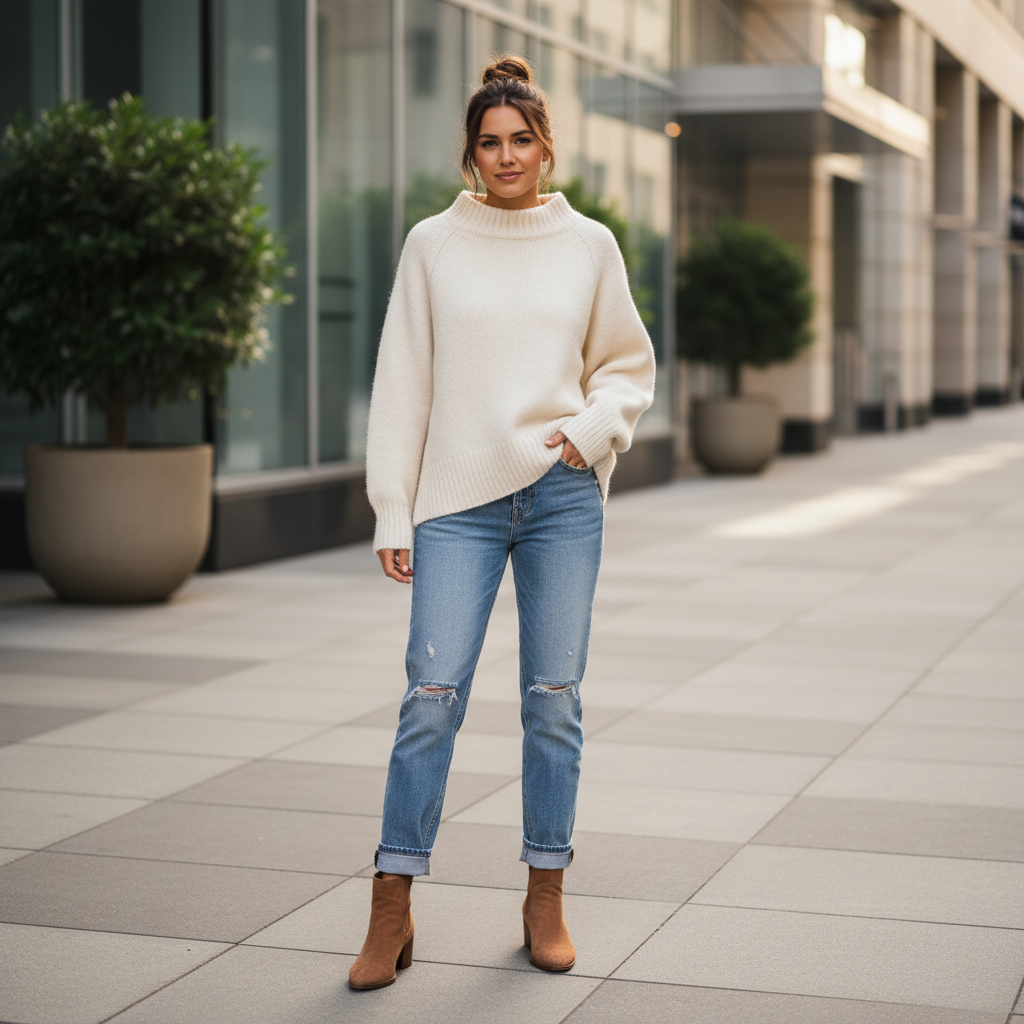
This guide focuses on how to choose oversized sweaters that look good on real bodies and real schedules, commuting, office AC, school drop-offs, travel days. You will get a quick comparison table, a fit checklist, and practical care tips so your next pick feels like a win, not a return label.
What “oversized” should mean (and what it should not)
In most wardrobes, “oversized” works when the sweater keeps a clear shape while giving you extra ease. The giveaway is structure in the right places, neckline, cuffs, hem, and a shoulder line that looks deliberately relaxed.
Here is a useful mental split:
- Intentional oversized: relaxed shoulder, roomy chest, sleeves with some volume, hem that still has a plan.
- Just too big: neckline collapses, armpits droop, sleeves swallow your hands, torso balloons with no drape control.
According to ASTM International, apparel sizing standards aim to create consistency in how garments are measured and labeled, but brands still interpret “oversized” differently. Translation, you cannot rely on the letter size alone, you have to check measurements and construction.
The quick comparison table: choose your oversized sweater by scenario
If you only want one sweater, pick based on where you will wear it most. This table keeps it simple.
| Scenario | Best knit type | Recommended fibers | Fit notes |
|---|---|---|---|
| Work + meetings | Fine-gauge knit | Merino, cotton blends, cashmere blends | Drop shoulder is fine, keep hem closer to hip for shape |
| Weekend casual | Chunky rib or textured knit | Cotton, wool blends, recycled synthetics | Roomy sleeves look great, pair with slimmer bottoms |
| Travel + layering | Medium-gauge, resilient knit | Merino blends, performance blends | Look for recovery so elbows do not bag out |
| Warm climate “winter” | Lightweight knit | Cotton, linen blends | Oversized can be shorter, avoid heavy acrylic heat trap |
| Sensitive skin | Smooth knit | High-quality cotton, merino, brushed blends | Avoid fuzzy halo right at the neck, test collar feel |
How to spot a great oversized sweater before you buy
Product photos can be misleading, so focus on features that usually predict comfort and longevity.
1) Fiber matters more than the brand name
- Merino: softer than many wools, often less itchy, good temperature regulation.
- Cotton: breathable and friendly for skin, but can stretch if the knit is loose and heavy.
- Cashmere: very soft, but quality varies, look for ply info and tighter knit if possible.
- Acrylic/poly blends: can be affordable and durable, but may run warmer and pill faster depending on knit and finishing.
According to The Woolmark Company, wool fibers can help manage moisture and temperature, which is why a light merino oversized knit often feels comfortable in more situations than a thick synthetic one.
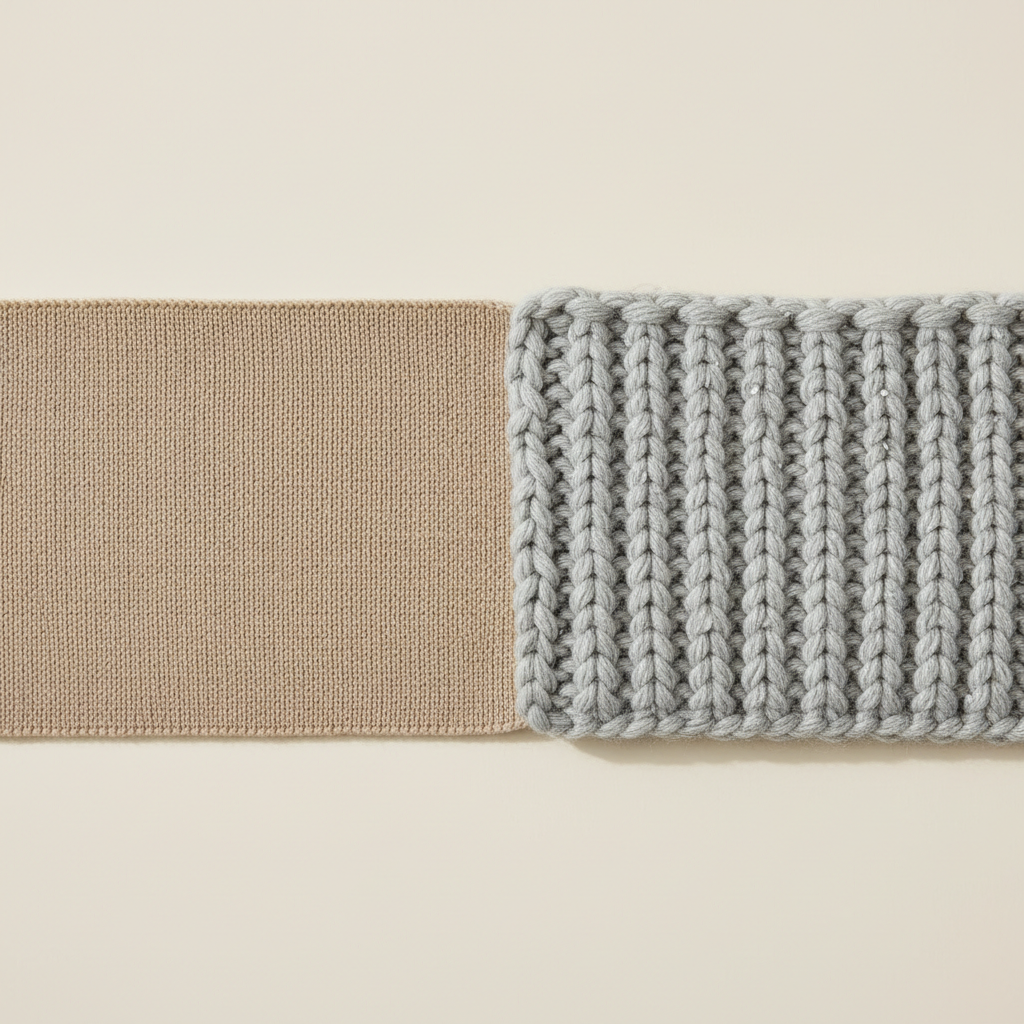
2) Construction details that keep oversized looking intentional
- Neckline finishing: ribbing that lies flat usually means fewer “stretchy bacon neck” problems later.
- Cuffs with structure: a defined cuff helps sleeves stay pushed up instead of sliding down all day.
- Hem treatment: ribbed or slightly shaped hems keep volume controlled.
- Seam placement: dropped shoulders are normal, but extreme drops can look costume-like.
3) Drape, not just size, makes it flattering
A sweater can be “oversized” and still flattering if it drapes along the body instead of hovering. Many people get better results from a sweater designed to be roomy than from sizing up a regular cut.
A quick self-check: which oversized fit will suit you?
Use this as a fast filter. You can do it in a fitting room, or at home with a tape measure and mirror.
- If your shoulders look broad quickly, try raglan sleeves or softer drop shoulders, skip very chunky shoulder seams.
- If you are petite, keep the hem closer to high hip or mid-hip, and watch sleeve length so hands still show.
- If you want to minimize midsection focus, look for vertical ribbing, side slits, or a slightly longer back hem.
- If you love leggings, choose a longer hem with side slits so it moves rather than clings.
- If you hate constant tugging, pick a neckline that stays put, crew or mock neck often behave better than wide boats.
One more practical check, lift your arms and sit down. If the sweater rides up dramatically or bunches at the waist, the pattern may be fighting your body shape even if it “looks fine” standing still.
Styling formulas that make oversized sweaters look put-together
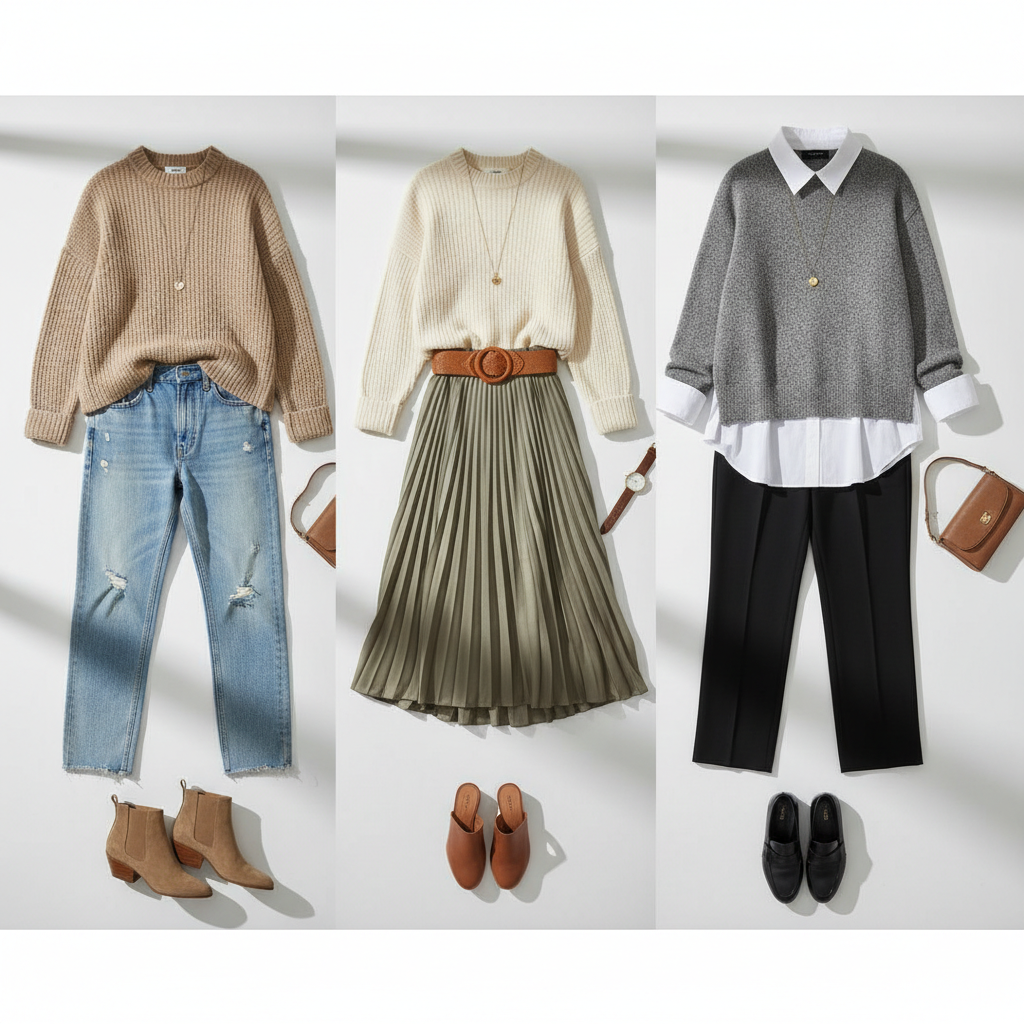
This is where oversized can either look effortless or like you borrowed someone else’s laundry. A few repeatable formulas help.
- Volume + slim: oversized sweater with straight jeans, slim trousers, leggings, or a midi skirt with a defined waist.
- Half-tuck or front-tuck: creates a waist cue without forcing a tight fit, works well with fine-gauge knits.
- Layer the collar on purpose: crisp button-down or fitted turtleneck under a roomy crew neck.
- Use one “clean line”: either show wrist (push sleeves) or show ankle (cropped pant), it keeps proportions sharp.
Practical buying tips: online sizing, reviews, and budget choices
Online shopping is where most “oversized regret” happens, because the model is styled, clipped, or photographed at angles that hide bulk. These steps usually reduce surprises.
Use measurements, not the size letter
- Compare chest and body length to a sweater you already love.
- Look at sleeve length from center back if listed, it predicts whether cuffs will swallow hands.
- If only garment length is listed, check where that length lands on your height, not on the model.
Read reviews for specific “tells”
- Pilling in the first week often signals shorter fibers or a very loose knit.
- “Stretched out after one wear” matters more than “runs big,” because oversized should still recover.
- Itchy comments tend to cluster around the neckline and cuffs, pay attention to those areas.
Budget strategy that works in real life
If you are building a small sweater rotation, many people do better with one nicer neutral (where fiber and construction shine) plus a couple of trend colors or textures at a lower price. That way your “daily driver” stays comfortable, and you still get variety.
Care and longevity: keep oversized from stretching, pilling, or shrinking
Oversized sweaters show wear faster because there is more fabric rubbing on bags, desks, and seat belts. Care is not glamorous, but it changes the lifespan.
- Wash less, air more: many knits do well with airing out between wears, especially wool blends.
- Use cold water and gentle cycles: helps reduce fiber stress and shape distortion.
- Dry flat: hanging can pull length and shoulders over time.
- De-pill carefully: a fabric shaver can help, go light to avoid thinning the knit.
According to The American Cleaning Institute, following garment care labels and using appropriate wash settings helps reduce damage like shrinking and distortion. If a sweater is labeled dry clean only, consider whether that maintenance fits your life before buying.
Key takeaways and a simple next step
The best oversized sweater is the one that feels soft enough to wear all day, holds a deliberate shape, and fits the way you actually plan to style it. If you are stuck, start with a medium-gauge knit in a neutral color, check measurements against a favorite top, and prioritize neckline and cuff structure.
If you want one immediate action, open your closet and pick the sweater you wear most, measure chest width and body length, then use those numbers as your baseline when shopping, it makes finding the best sweaters for women oversized far less random.