
Capsule wardrobe guide questions usually start the same way, you own plenty of clothes but still feel stuck, rushed, or unhappy with outfits. A capsule wardrobe fixes that by shrinking decision fatigue and making your closet feel intentional, not random.
What makes it worth doing is practical, you buy less, you wear more of what you own, and getting dressed stops being a daily negotiation with your mirror. It also makes shopping calmer because you know what actually fits your life.
This guide stays realistic, not “15 items and you’re done.” Bodies change, workplaces vary, seasons hit differently in Seattle vs. Miami, and you might love trends, you just want them on your terms. You’ll get a simple framework, a flexible checklist, and a workable starter capsule you can adjust without overthinking.
What a capsule wardrobe really is (and what it isn’t)
A capsule wardrobe is a small, curated set of clothing that mixes easily, covers your real weekly activities, and reflects your style. The point is high repeatability, not deprivation.
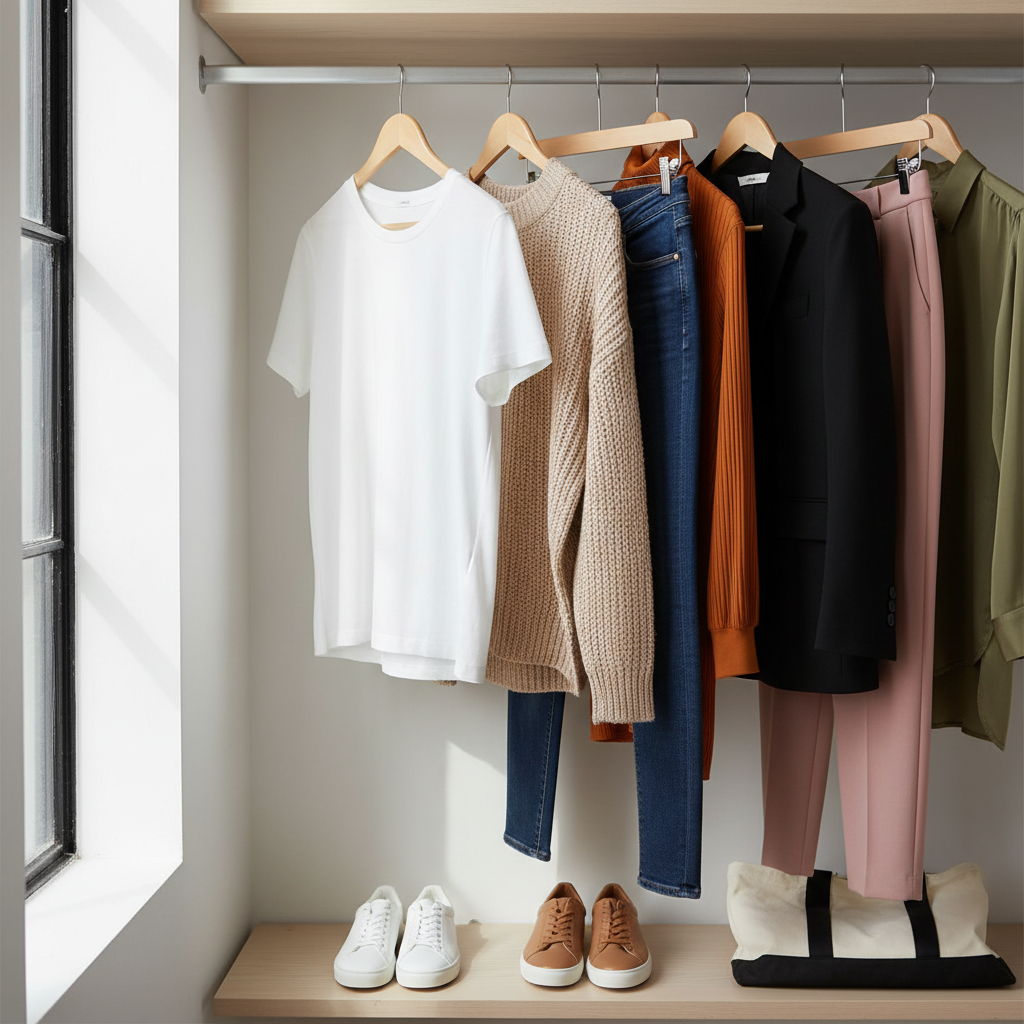
It is not a strict uniform, a beige-only aesthetic, or a rule that you can never buy anything new. Many people keep a capsule for daily wear and still have separate “extras” like special-occasion outfits, gym gear, or hobby clothing.
According to Goodwill, reusing and donating clothing can extend a garment’s life and reduce waste, which is one reason capsule wardrobes often appeal to people who want a lighter footprint. The lifestyle benefit still comes first, though, if it doesn’t make mornings easier, it won’t stick.
Why most closets feel full but outfits feel scarce
If you’re constantly thinking “I have nothing to wear,” it’s rarely because you lack clothing. Usually the closet has gaps in function and coordination.
- Mismatch with your week: you own “someday” pieces, but your actual life is work, errands, kid activities, travel, and weather shifts.
- Too many single-use items: tops that only work with one bra, shoes that only match one dress, pants that need one specific heel.
- Fit and comfort drift: even small fit issues turn a garment into a “not today” item.
- Color chaos: lots of nice pieces, few that play well together.
- Shopping without a plan: buying “a cute top” instead of filling a specific outfit or gap.
A capsule wardrobe guide is helpful because it forces one honest question: what do you need to wear, repeatedly, and what do you want to feel like while wearing it?
Quick self-check: which capsule approach fits you?
Before you purge anything, classify your situation. This saves you from over-editing and then re-buying the same category next month.
Use this 2-minute checklist
- Your lifestyle mix: roughly what % is work, casual, dressy, active, travel?
- Your climate reality: do you need true four-season coverage, or mostly warm/cool?
- Your comfort non-negotiables: sleeves, rise, fabrics, shoe heel height, bra compatibility.
- Your style anchors: 3 words that feel like you (examples: polished, relaxed, modern).
- Your daily friction points: shoes, outerwear, jeans, work tops, layering?
If you’re in a heavy-dress-code job, your capsule will be more “work-first.” If you work from home or have a casual workplace, your capsule should lean into elevated casual with one or two polished outfits ready to go.
Build your foundation: colors, silhouettes, and fabrics
This is the part people want to skip, and it’s where most capsule wardrobes either click or quietly fall apart. Keep it simple and specific.
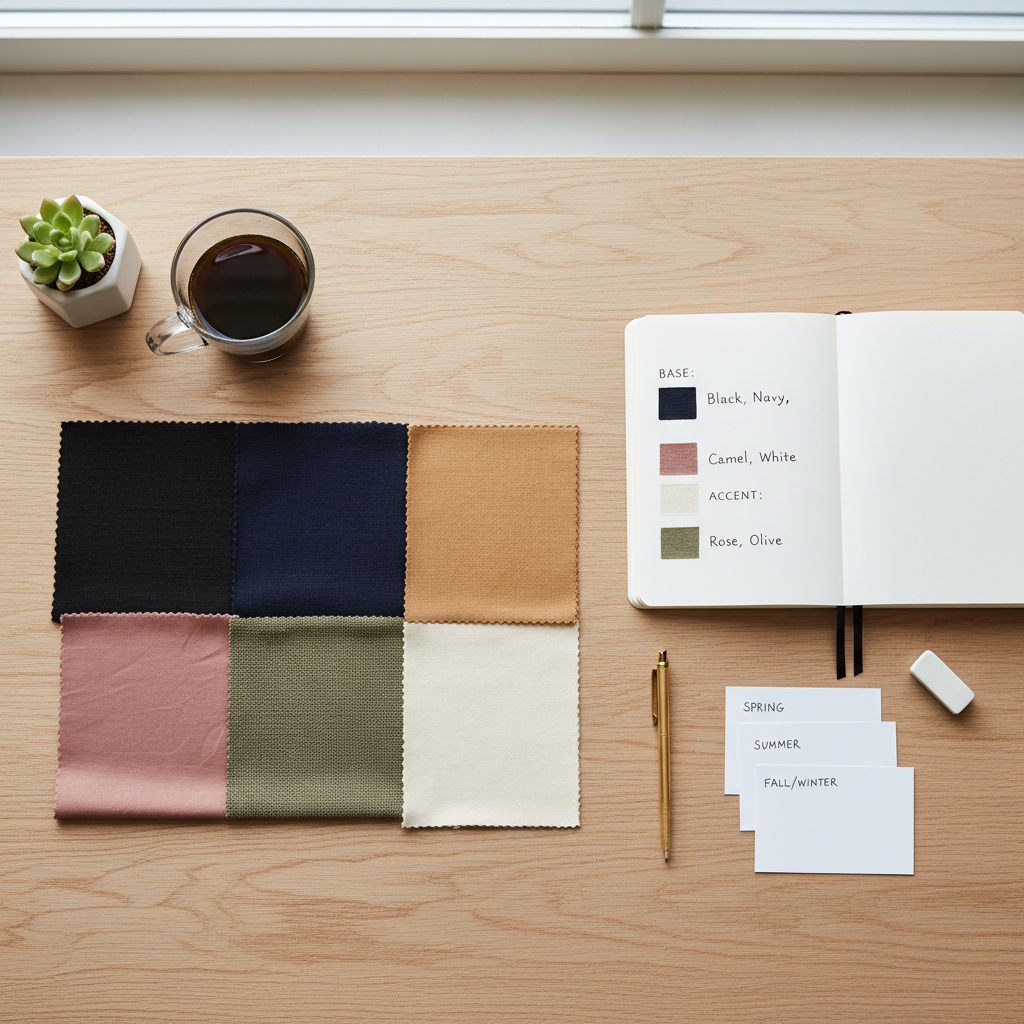
Pick a workable color palette
- 2–3 neutrals: choose what you already wear a lot (black, navy, gray, camel, cream).
- 1–2 accents: colors you enjoy seeing on yourself, used in tops, knits, or accessories.
- Optional print: one repeatable print that matches your neutrals (stripe, small floral, subtle check).
A common mistake is choosing a “Pinterest palette” that doesn’t match your actual shoes, bags, coat, and work environment. Start from what you already reach for.
Set 2–3 go-to silhouettes
- One preferred pant shape (straight, wide-leg, slim, tailored).
- One easy top shape (tee + blazer, blouse, knit, button-down).
- One dress or skirt formula if you wear them (midi dress, slip skirt, shirt dress).
Choose fabrics that survive your life
Dry-clean-only can be fine, but if your daily routine can’t support it, those items become expensive closet decor. If you have sensitive skin or sensory preferences, prioritize that, comfort drives repeat wear.
A practical starter capsule (with a flexible table)
This starter set aims for mix-and-match and real-life use. Adjust counts up or down based on how often you do laundry and how formal your week is.
Starter capsule table (women)
| Category | Suggested count | What to look for |
|---|---|---|
| Tops (tees, tanks, blouses) | 6–10 | Works with your bras, layers well, consistent palette |
| Knits (sweaters, cardigans) | 3–5 | Comfortable necklines, not too precious to wear often |
| Bottoms (jeans, trousers, skirt) | 4–6 | Two “easy” options + at least one polished option |
| Layering (blazer, denim jacket, overshirt) | 2–3 | Instant outfit finisher, fits over your knits |
| Dresses / one-pieces | 1–3 | Can dress up or down with shoes and a layer |
| Outerwear | 1–3 | Matches most outfits, weather-appropriate for your area |
| Shoes | 3–5 | One everyday, one polished, one weather-proof, one optional |
| Bags + belts | 2–4 | Neutral + one personality piece, practical strap options |
Key point: you’re building outfits, not categories. If you own 10 tops but only 2 that work with your bottoms and shoes, your capsule won’t feel functional.
Step-by-step: edit your closet without regret
This is the “do it in an afternoon” method that avoids panic purging. You’ll still move fast, just with fewer rebound purchases later.
1) Pull, don’t purge
Create three piles: wear weekly, wear sometimes, not wearing. Nothing goes into a donation bag yet.
2) Build 10 outfits from the wear-weekly pile
- 5 casual outfits
- 3 work or polished outfits
- 2 “I need to look good fast” outfits
If you can’t build 10 outfits, you found your real gaps, usually shoes, a layer, or a bottom that anchors multiple looks.
3) Identify gaps with a short shopping list
- Write gaps as outfit problems, not item cravings, “need a third work top that matches trousers” beats “need a cute blouse.”
- Set rules before shopping, palette, fabric, budget, return window.
4) Use a “quarantine box” for maybes
Put uncertain items in a box for 30 days. If you don’t miss them, you can donate or resell with less emotion involved.
Make it work season after season (without starting over)
A capsule wardrobe guide is most useful when it becomes a system. The closet stays stable, and you rotate in a few seasonal pieces instead of rebuilding your identity every quarter.
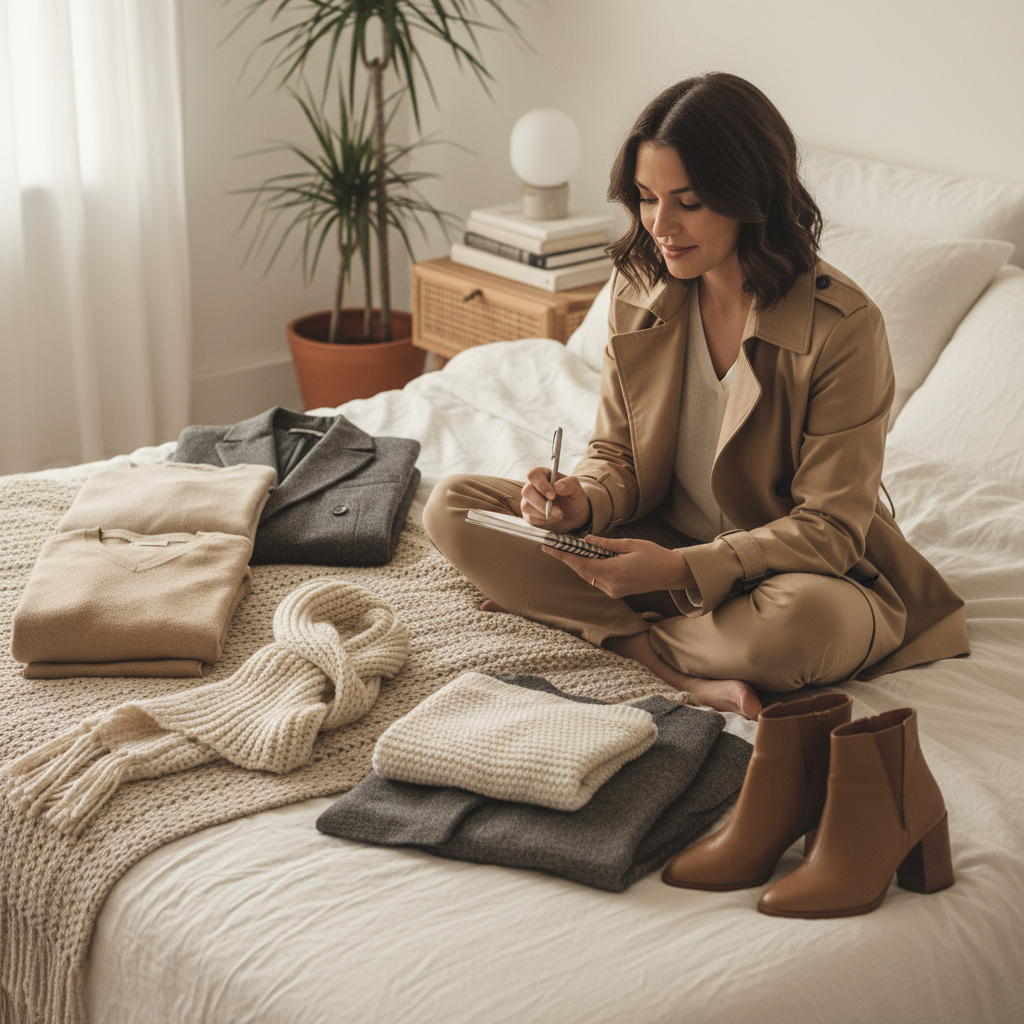
Seasonal swap rules that stay sane
- Keep cores constant: jeans/trousers, go-to tees, your main blazer, your everyday shoes if climate allows.
- Swap layers: linen shirts and lighter knits for summer, heavier knits and tights for winter.
- One-in, one-out for trends: add a trendy shoe or color, remove a piece you already feel “meh” about.
Simple maintenance habits
- Once a month, note what you avoided wearing and why.
- Fix the “small blockers” quickly, tailoring, replacing a worn bra, resoling shoes.
- Keep a running list of gaps, then shop intentionally when sales hit.
According to FTC guidance on shopping, reviewing return policies and keeping records helps consumers avoid headaches, that matters more with capsule building because you’re buying fewer, better pieces and returns become part of the process.
Common mistakes (and how to dodge them)
- Buying your fantasy life: if you rarely attend formal events, don’t let dressy pieces dominate your capsule.
- Going too minimal too fast: many people do better with a “soft capsule,” keep extras in a separate bin, then trim later.
- Ignoring fit: if an item tugs, gapes, or requires constant adjusting, it won’t earn repeat wear.
- Overdoing neutrals: if you feel washed out, add an accent color near your face, scarf, top, lipstick, earrings.
- Counting items like a challenge: a number target can help, but function comes first.
If you’re dealing with major body changes, chronic pain, or sensory issues, it can help to consult a stylist who understands adaptive dressing, or a tailor who can recommend realistic alterations, comfort is not a “nice to have.”
Conclusion: a capsule should feel like relief
The best capsule wardrobe is the one you actually wear, on an ordinary Tuesday, without bargaining with yourself. Start by building 10 outfits from what you already like, then fill gaps with a short list that supports those outfits. If you do nothing else this week, take 20 minutes, pick your neutrals, and choose one “default outfit” you can repeat with small changes.
FAQ
How many pieces should be in a women’s capsule wardrobe?
Many capsules land somewhere around 25–40 everyday pieces, but the right number depends on your laundry cycle, dress code, and climate. If your outfits work and you stop over-shopping, the count is doing its job.
Do I need to throw out most of my clothes to start?
No, and in many cases that backfires. Start by separating what you wear weekly, build outfits, then move “maybes” into a temporary box so you can decide with less pressure.
Can a capsule wardrobe include color and trends?
Yes, it often works better when it reflects you. Keep the base in repeatable neutrals, then add one or two accent colors or a trend item that still matches your core pieces.
What if my job requires business formal clothing?
Build a work-first capsule, then add a small casual mini-capsule for weekends. In strict environments, prioritize tailoring and consistent shoe choices because they multiply outfit options quickly.
How do I build a capsule wardrobe on a budget?
Use what you already own as the base, then replace only the pieces blocking outfits, like shoes, a layer, or a versatile bottom. Thrift and resale can work well for blazers and coats, just check fabric wear and return options if shopping online.
How often should I update my capsule?
Most people do a light review at season changes, plus quick monthly notes on what isn’t getting worn. The goal is small adjustments, not constant reinvention.
Is a capsule wardrobe guide useful if my weight fluctuates?
It can be, but you may want a “range capsule” with forgiving fits, wrap styles, knits, elastic waists, and layering pieces. If fit changes are significant, a tailor or stylist can help you avoid spending money on the wrong sizes.
If you’re trying to build a capsule but keep getting stuck on gaps, duplicates, or impulse buys, it may help to map your week and create a short, outfit-based shopping list, it’s a more low-stress way to get a closet that finally works with you.