
Jumpsuit styling ideas often sound simple until you’re standing in front of a mirror wondering, “What shoes make this look intentional?” or “Why does this feel too dressed up?” The good news is a jumpsuit already does half the work, you mainly need the right layers, shoes, and proportion tweaks.
If you want outfits that look pulled together without a full closet overhaul, think in formulas, not one-off looks. A few repeatable combos cover most situations: casual errands, office days, dinner plans, even travel.

One quick caveat before we get into outfits: small fit details change everything with a jumpsuit, especially torso length and waist placement. If something feels “off,” it’s often fit, not your styling skills.
Why jumpsuits can be tricky (and how to fix the usual issues)
A jumpsuit is one piece, but it creates a full head-to-toe silhouette, so little proportion problems read louder than they do with separates. Here are the issues I see most often, plus straightforward fixes.
- Torso feels too short or too long: Try a different rise, add a belt to redefine the waist, or choose styles with adjustable straps and elastic waists.
- “Boxy” shape: Add structure on top (blazer, cropped jacket) or use a belt, even a slim one, to give the outfit a center point.
- Leg line looks heavy: Switch to a sleeker shoe, add a heel, or cuff the hem if the fabric allows.
- Hard to dress for weather: Build a layer plan: light cardigan for A/C, trench for rain, wool coat for winter.
According to Vogue... jumpsuits remain a recurring staple in seasonal collections, which tracks with why they’re worth learning to style: you can wear one year-round if you treat it like a base layer.
A quick self-check: which jumpsuit are you styling?
Before you copy an outfit idea, pin down your jumpsuit “type.” The same accessory can look polished on one and costume-y on another.
- Fabric: denim, linen, crepe, satin, ponte, jersey
- Leg: tapered, straight, wide-leg, cropped
- Neckline: V-neck, square, halter, collared, strapless
- Waist: elastic, tie waist, fixed waist seam, no waist definition
- Vibe: utility, minimalist, romantic, party
If your jumpsuit is wide-leg and loose through the waist, plan to add structure somewhere, either a belt or a more tailored layer. If it’s already fitted, keep the styling clean so it doesn’t feel busy.
Easy outfit formulas you can repeat (casual to dressed up)
These jumpsuit styling ideas work because they solve proportion and occasion at the same time. Pick a lane, then adjust color and accessories.
1) Weekend casual: jumpsuit + denim jacket + sneakers
This combo looks effortless and reads “off-duty” immediately. Choose a slightly cropped denim jacket if your jumpsuit runs long, it keeps your waist from disappearing.
- Shoes: white sneakers or retro runners
- Bag: crossbody or mini tote
- Extra: baseball cap, small hoops
2) Clean and simple: monochrome + one contrast accessory
Monochrome styling is the easiest way to look expensive without trying too hard. Keep the jumpsuit and shoes in the same color family, then add one contrast piece.
- Example: black jumpsuit + black sandals + tan belt
- Example: cream jumpsuit + nude flats + red lip or bag
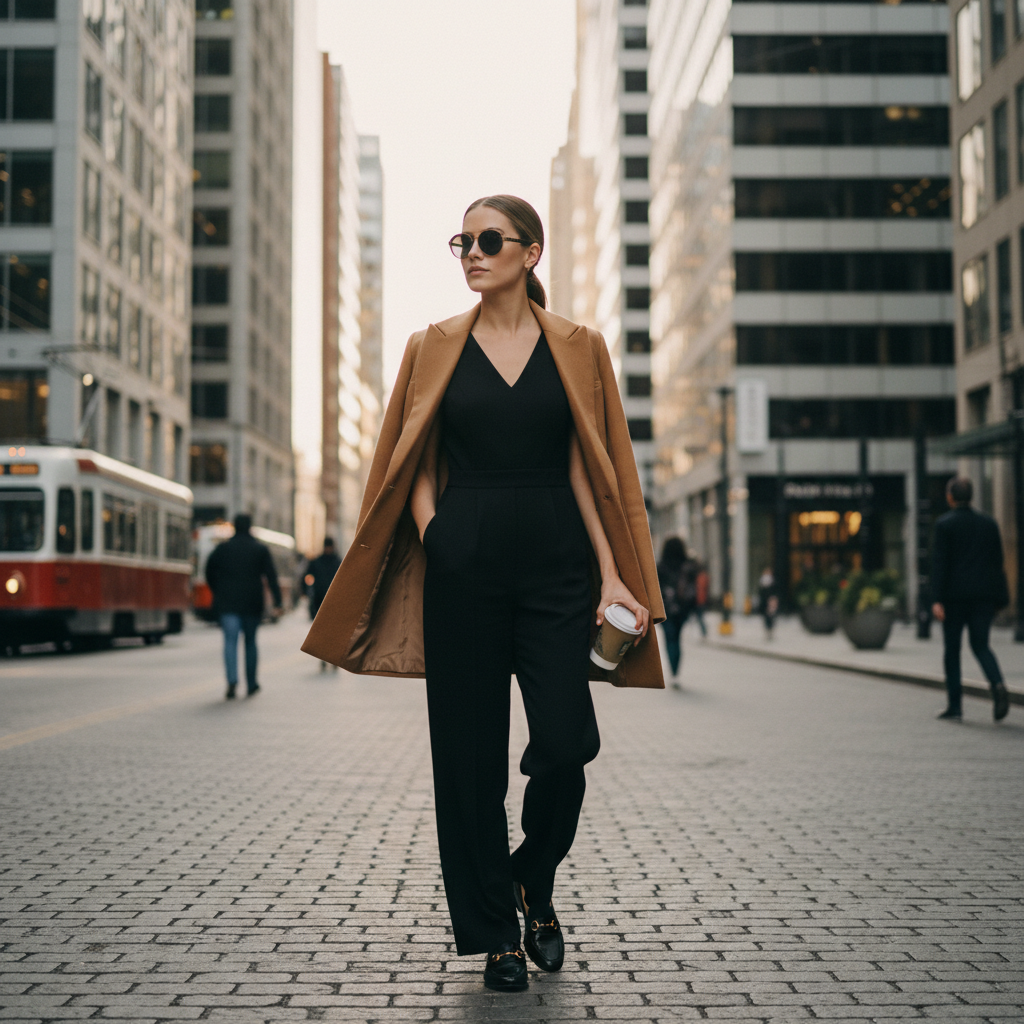
3) Work-leaning polish: jumpsuit + blazer + loafers
If your workplace allows jumpsuits, this is the safest styling direction. A blazer adds authority and solves the “is this too casual?” question fast.
- Choose a blazer that hits at hip bone or slightly below for balance.
- Loafers read sharper than sneakers, block heels read dressier than loafers.
4) Night out: jumpsuit + statement earrings + heeled sandal
For evenings, you rarely need a complicated outfit, just upgrade the shine and the shoe. Satin, crepe, or a darker color jumpsuit usually looks more “night” than linen or denim.
- Pick one statement: earrings or clutch or bold shoe.
- Keep hair and makeup aligned with the vibe, otherwise the outfit can feel unfinished.
5) Travel day: jumpsuit + light layer + hands-free bag
For airports and long days, comfort matters, but you still want to look put together in photos. Choose soft fabric with stretch, then add a layer that can handle cold A/C.
- Best layers: cardigan, utility jacket, relaxed blazer
- Best shoes: sleek sneakers, cushioned loafers
Shoes that change the whole look (a quick decision table)
When people ask for jumpsuit styling ideas, they usually mean “help, my shoes are wrong.” Here’s a cheat sheet that works in most closets.
| Jumpsuit vibe | Best shoe options | What to avoid (often) |
|---|---|---|
| Casual (denim/utility) | Sneakers, flat sandals, ankle boots | Super delicate stilettos |
| Office-appropriate (crepe/ponte) | Loafers, block heels, pointed flats | Chunky beach slides |
| Dressy (satin/drapey) | Strappy heels, sleek mules | Bulky athletic shoes |
| Wide-leg silhouette | Platform sandal, heel, pointed toe | Rounded toe that shortens the line |
Hem length matters more than people expect. If your wide-leg jumpsuit hits the floor, a slightly higher sole prevents dragging and keeps the fabric moving nicely.
Accessories and layering tricks that flatter (without overdoing it)
Accessories should clarify the outfit’s message. If your jumpsuit feels plain, add one focal point and stop there, it’s very easy to over-style a one-piece.
Belts: the fastest “shape fix”
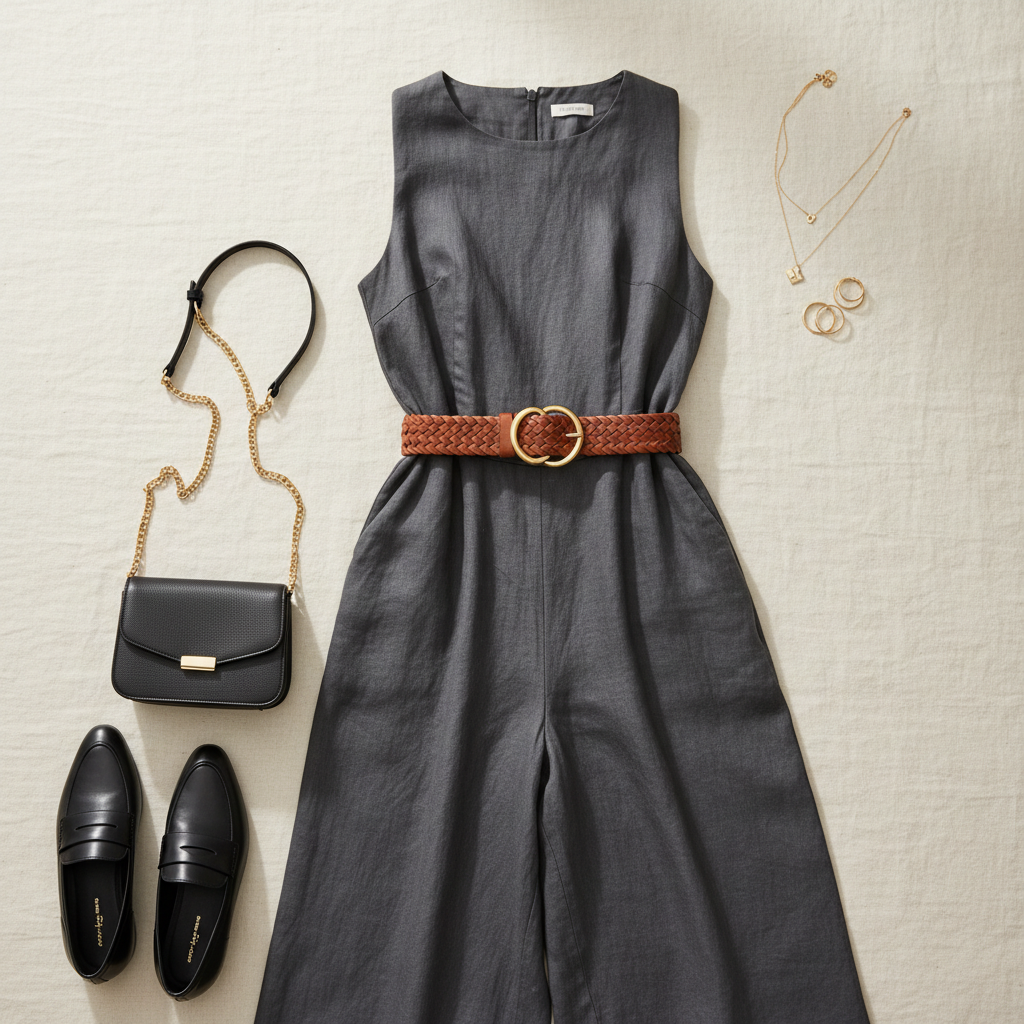
- Wide belt: helps define waist on looser styles, especially in solid colors.
- Slim belt: better for already-fitted jumpsuits, adds polish without squeezing.
- Color strategy: match belt to shoes for a clean line, or choose contrast to create a waist.
Layers: choose one role
- Structure: blazer, cropped jacket, moto jacket
- Warmth: cardigan, coatigan, long wool coat
- Weather: trench, lightweight rain jacket
Bags and jewelry: keep the scale consistent
A wide-leg jumpsuit usually looks better with a slightly larger bag and bolder jewelry. A fitted silhouette can handle finer pieces. If you mix scales, do it on purpose, not accidentally.
Practical styling steps (use this when you’re getting dressed)
If you want a repeatable process, this is the quick routine that saves time. It sounds basic, but it prevents the spiral of trying on eight pairs of shoes.
- Step 1: Pick the occasion anchor: sneakers for casual, loafers for work, heels for night.
- Step 2: Decide waist plan: no belt, slim belt, or statement belt.
- Step 3: Add one layer if needed, but make it either structured or cozy, not both.
- Step 4: Choose one highlight: earrings, bag, lipstick, or a standout shoe.
- Step 5: Do a comfort check: sit, walk, reach, bathroom ease, and strap stability.
Common mistakes that make a jumpsuit look “off”
Most “I hate how I look in this” moments come down to one of these. Fixing just one usually turns the outfit around.
- Ignoring proportions: long wide-leg plus long cardigan can swallow your frame, swap to a cropped or structured layer.
- Wrong bra/undergarments: visible lines and gaping necklines show up fast, seamless pieces help, and for tricky fits you might want a tailor.
- Over-accessorizing: jumpsuit + big necklace + big earrings + wide belt often feels crowded.
- Hem dragging: it ruins the line and damages fabric, hem or switch shoes.
According to Consumer Product Safety Commission (CPSC)... loose clothing can pose safety hazards around certain equipment and heat sources; if you cook a lot or work near machinery, consider more fitted sleeves and secure hems, and when in doubt, follow workplace guidance.
When tailoring or a pro fitting is worth it
If you love the jumpsuit but keep fighting it, a small alteration can be the difference between “never worn” and “go-to.” A tailor can often adjust straps, take in the waist, or hem the leg, which changes how the whole piece hangs.
- Consider tailoring if you see gaping at the bust, excess fabric pooling at the waist, or inseam bunching.
- If fabric is delicate (satin, silk blends), ask about stitch marks and test areas, professionals usually advise on safer options.
Conclusion: make it easy, not perfect
The best jumpsuit styling ideas are the ones you’ll actually repeat on a busy morning: pick a shoe direction, add one layer with a clear job, then choose a single focal accessory. If your outfit still feels “wrong,” check fit and hem before you buy anything new.
Try this this week: build two saved formulas in your head, one for casual and one for work or nights out, then take a quick mirror photo when it looks good so you can copy-paste later.
FAQ
What shoes look best with a wide-leg jumpsuit?
Pointed-toe flats, heels, or platform sandals usually keep the leg line long. If the hem is very wide and long, a shoe with some height often prevents dragging and makes the silhouette feel intentional.
How do I make a jumpsuit look more professional for the office?
Add a blazer or structured jacket, choose loafers or block heels, and keep accessories minimal. Solid colors and heavier fabrics like ponte or crepe tend to read more work-appropriate than very casual linen.
Can petites wear jumpsuits without looking shorter?
Yes, but hem and waist placement matter. Cropped lengths or tailored hems help, and a belt or defined waist keeps your proportions clear rather than “all one column.”
How do you style a jumpsuit for colder weather?
Think like you’re styling pants: add a coat, boots, and warm base layers if the fit allows. A long wool coat over a fitted jumpsuit often looks sleek, while a cropped jacket can balance a wide-leg style.
What kind of belt works with a jumpsuit?
Wide belts add shape on relaxed fits, slim belts add polish on fitted ones. Matching belt color to your shoes is the easiest way to keep the look cohesive.
How do I avoid awkward bunching in the crotch or waist?
That’s often a torso length or rise issue, not something accessories can fix. If you’re close to a good fit, tailoring adjustments or trying a different brand cut may be more effective than re-styling.
Are jumpsuits comfortable for travel and long days?
Many are, especially soft knits or pieces with stretch, but bathroom convenience can be a dealbreaker. If you’ll be on the go, test it at home first and choose easy layers that don’t tangle.
If you’re building a small wardrobe that works hard, start by choosing one jumpsuit you genuinely like wearing, then create two “default” looks around it, casual and polished, so you’re not reinventing the outfit every time you pull it out.