
wedding guest dress shopping gets tricky fast when the invitation gives you one vague line like “cocktail attire,” and suddenly you’re overthinking hems, colors, and shoes.
This guide keeps it practical, how to read the room (and the invite), what outfits work for common venues, and the small choices that stop you from feeling underdressed or uncomfortably overdressed once you arrive.
I’m also calling out the spots where people waste money, like buying something gorgeous that only works standing up, or picking a fabric that looks great online but photographs poorly in midday sun.
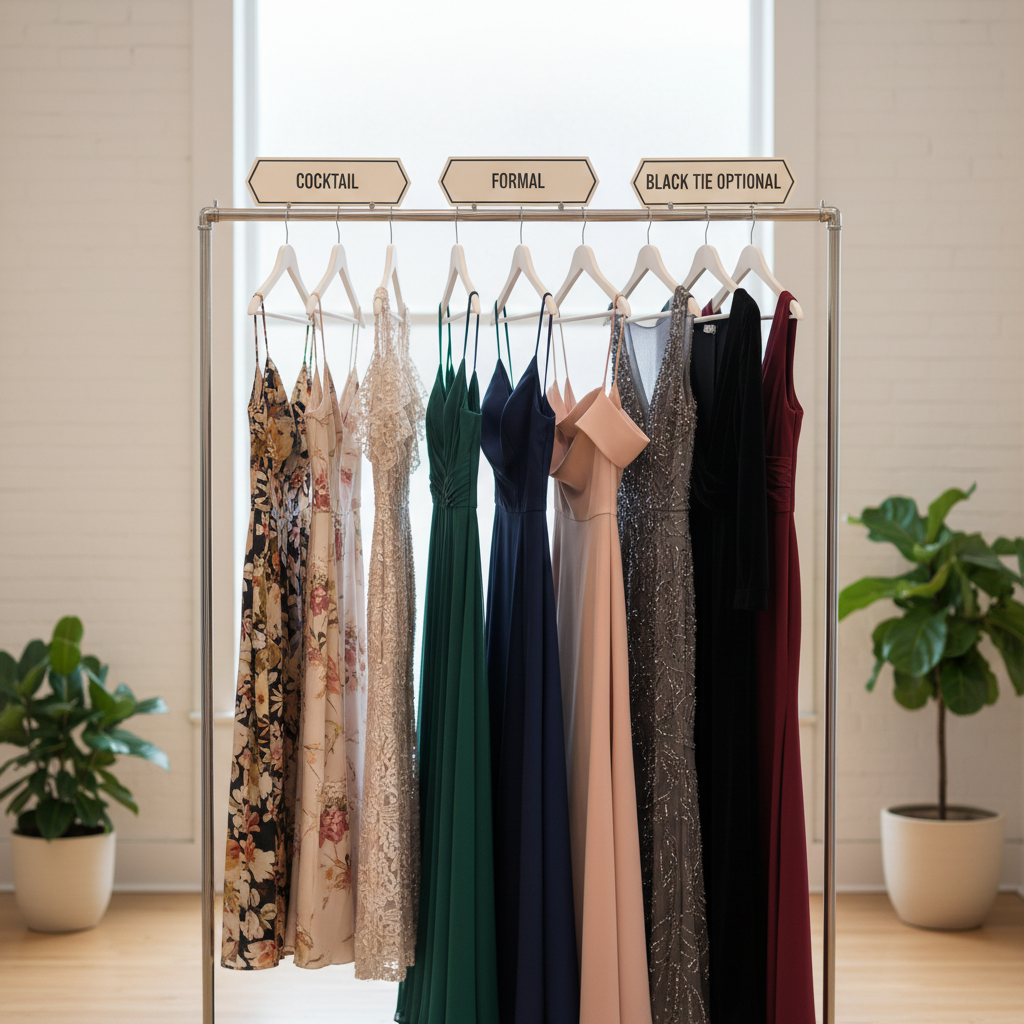
Start with the dress code (and what it really means)
Most “what should I wear?” stress disappears once you translate dress codes into real outfits. A wedding guest dress usually fails when it’s technically “pretty” but mismatched to formality, time of day, or venue.
According to Emily Post Institute, dress codes are meant to help guests align with the event’s level of formality rather than follow rigid fashion rules.
Quick dress code cheat sheet
- Casual / Dressy casual: midi dress, polished jumpsuit, elevated separates; think neat, not beachwear.
- Cocktail: knee to midi, structured fabrics, dressy heels or refined flats, statement earrings.
- Formal / Black-tie optional: floor-length or luxe midi, richer fabrics (satin, crepe), more intentional styling.
- Black tie: gown or very dressy column dress, elegant wrap, formal accessories.
If the invitation includes a venue name, that’s basically a second dress code. A vineyard at 4 p.m. reads differently than a downtown hotel at 7 p.m., even if both say “cocktail.”
Match the venue and time of day, not just the vibe
Here’s the part people skip, then regret when they sink into grass or freeze during an outdoor ceremony. Build your outfit around the physical reality of the location.
Venue-based outfit formulas
- Beach: breezy midi dress, block heels or dressy sandals, wrap for wind; avoid dragging hems.
- Garden / outdoor lawn: floral midi, wedges or block heels, light layer; consider bugs and heat.
- Barn / rustic: polished dress with texture (jacquard, crepe), ankle boots or block heels; skip overly sparkly club looks.
- Ballroom / hotel: satin or crepe midi/maxi, sleek accessories, evening clutch; this is where glam reads right.
- Church + reception: modest neckline option or add a blazer/wrap; keep hemlines and cutouts in check.
Time-of-day matters more than people admit. Daytime weddings lean lighter in color and styling, while evening invites deeper tones and more shine.
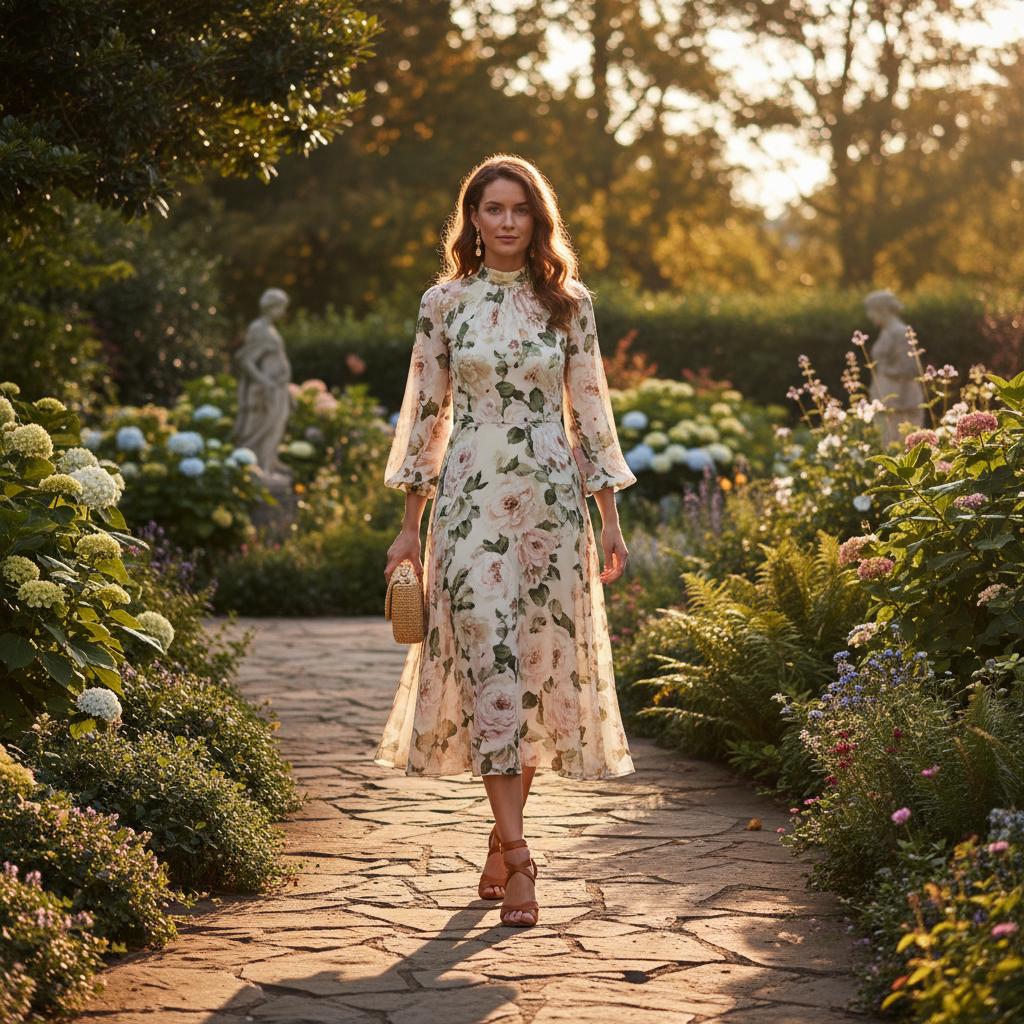
Choose fabric and color that look good in real life (and photos)
A wedding guest dress can look perfect in a mirror and still feel off on camera. Fabric and color do a lot of quiet work, especially under harsh daylight or warm indoor lighting.
Fabric picks by season
- Spring: crepe, chiffon, lighter satin; easy movement, not too heavy.
- Summer: cotton blends, linen blends, breathable viscose; choose lined options if the fabric turns sheer in sun.
- Fall: satin, heavier crepe, jacquard; sleeves and richer textures feel on-season.
- Winter: velvet, thicker crepe, brocade; add tights and a structured coat when needed.
Color guidance that avoids common landmines
- Skip white and “reads white”: champagne, ivory, very pale blush often photographs close to bridal.
- Be careful with neon: it can overpower group photos and look harsher indoors.
- All-black: usually fine for evening and formal settings, but soften it for daytime with color in accessories.
- Red: can be stunning, just keep the silhouette and styling refined so it doesn’t feel attention-grabbing.
If you’re unsure, jewel tones, muted florals, and mid-tone solids tend to work across many venues without stealing focus.
A fast self-check list before you buy (or commit)
This is the 90-second filter that saves you from a dress you only tolerate for two hours. If you can’t check most of these boxes, keep looking.
- Comfort test: you can sit, eat, and dance without constant adjusting.
- Movement test: straps stay put, neckline behaves when you hug people.
- Weather plan: you have a layer, and your shoes match the ground surface.
- Undergarments plan: bra solution is realistic, not “I’ll figure it out later.”
- Photo test: fabric isn’t see-through in bright light, and it doesn’t wrinkle instantly.
One more that matters: if you’ll spend the entire ceremony thinking about your hemline or slit, it’s not the right choice, even if it looks amazing online.
Practical outfit ideas by dress code (with a simple table)
If you want plug-and-play ideas, use these as starting points, then adjust color and accessories to fit the couple’s vibe. The goal is a wedding guest dress that feels intentional, not costume-y.
| Dress code | Dress option | Shoes | Outer layer | Accessories |
|---|---|---|---|---|
| Dressy casual | Solid midi wrap dress | Dressy flats or low block heel | Light cardigan or cropped jacket | Hoops + small crossbody |
| Cocktail | Structured midi in crepe or satin | Strappy heel or pointed-toe pump | Blazer or elegant shawl | Statement earrings + clutch |
| Formal | Floor-length or luxe midi (slip + wrap) | Heel with stable base | Wool coat or faux-fur wrap | Metallic jewelry + evening bag |
| Black tie | Gown or refined column dress | Formal heel | Evening wrap | Classic jewelry + sleek clutch |
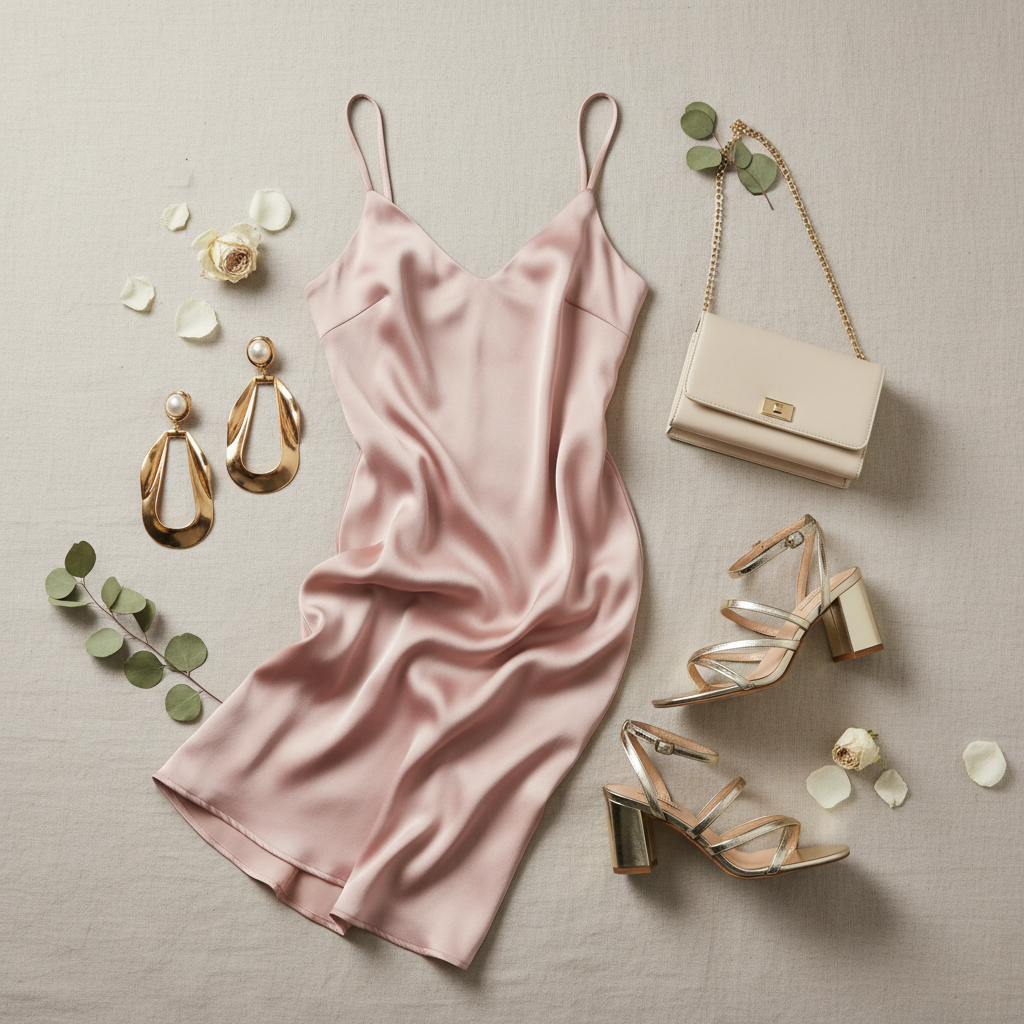
Styling details that make the look feel “wedding-appropriate”
People focus on the dress, but the finishing choices do most of the “appropriate” work. You can make a simpler dress read elevated, or accidentally make a great dress feel too casual.
Key takeaways (save these)
- Hair + bag set the tone: a sleek low bun and a clutch can upgrade a minimal midi instantly.
- One statement is enough: bold earrings or a bold shoe, not everything competing at once.
- Bring a layer: even summer venues can blast AC, and outdoor ceremonies cool down fast.
- Pick shoes for the surface: stilettos on grass are a bad time, and you’ll be thinking about it all night.
If you’re between two levels of dressiness, most situations reward being slightly more polished, as long as you’re not drifting into “bridesmaid” territory.
Common mistakes to avoid (so you don’t feel awkward later)
These are the repeat offenders, and they’re usually fixable with one small swap.
- Buying too close to the wedding: rush shipping and last-minute tailoring cost more than the dress sometimes.
- Ignoring dress code wording: “Black-tie optional” is not “anything goes,” it’s “formal is welcome.”
- Overly revealing cuts: a deep plunge plus a high slit plus backless often reads like nightlife, not celebration.
- Unmanaged sheerness: sunlight and flash photography can surprise you, do a quick window test.
- Over-accessorizing: if you remove one item and the outfit improves, you had your answer.
And yes, “don’t wear white” still stands. When in doubt, choose something clearly non-bridal and move on.
When it makes sense to ask the couple (or a pro) for clarification
If you’re genuinely stuck, a quick check can save you stress. Ask the couple or someone close to them when the invite is unclear, especially for cultural or religious ceremonies where expectations can vary.
For fit issues, a tailor can be worth it even for mid-priced pieces, hemming a dress, securing straps, or adding a modesty panel changes how confident you feel. If you have skin sensitivities, footwear pain, or mobility needs, it may help to consult a medical professional or specialist for supportive shoe options, since comfort and safety matter more than a trend.
Conclusion: a simple way to pick your outfit without spiraling
The most reliable approach is boring in the best way: confirm the dress code, match the venue and weather, then pick a fabric and shoe that support a long day. From there, keep styling clean and intentional.
If you want one next step, pull two outfit options, take quick photos in natural light, then choose the one that looks polished without needing constant adjustment.
FAQ
What colors should a wedding guest avoid besides white?
Very pale shades that photograph white, and anything that looks like a bridal party color when you know their palette. If you’re unsure, mid-tones and jewel tones usually stay safely “guest.”
Can I wear black to a wedding as a guest?
In many U.S. weddings, black is normal, especially for evening or formal settings. For daytime or very summery venues, soften it with lighter accessories so it feels celebratory.
Is a short dress okay for cocktail attire?
Often yes, but aim for refined rather than “night out.” A tailored knee-length or slightly above-knee hem with dressy fabric tends to read right.
What should I wear to an outdoor wedding if it might rain?
Choose a fabric that won’t show every drop, bring a structured layer, and pick shoes you can walk in on wet ground. A small umbrella beats gambling on “it’ll clear up.”
How do I make a simple wedding guest dress look more formal?
Upgrade with a sleek hairstyle, a clutch instead of a day bag, and more intentional jewelry. Swapping to dressier heels or a refined wrap can change the whole read.
Are jumpsuits acceptable as wedding guest attire?
Usually yes when they look polished and match the dress code. A structured, full-length jumpsuit in crepe or satin often fits cocktail or formal better than a casual wide-leg romper style.
What if the invitation doesn’t list a dress code?
Use the venue, time, and season as your guide, and look at the couple’s wedding website if they have one. When still unclear, cocktail-leaning attire is a safe middle ground for many weddings.
If you’re trying to land on a wedding guest dress quickly without buying three options and returning two, share the venue, start time, and the dress code wording with a stylist or a trusted boutique associate, you’ll usually get a clearer “yes or no” than you will from scrolling alone.